Issue 53 of The Open Record
Washington Is Rationing What the Public Sees. The Press Ban Is Only the Loudest Case.
A White House ban on three news outlets, a Pentagon death count the Washington Post says is short, and four Pennsylvania measles deaths the CDC still will not count.
Daily news review for Tuesday, September 22, 2026. Every source is footnoted. A note on method is at the bottom.
0% read, about 16 min remaining
The connective fact of this news cycle is a federal government deciding what the public gets to see. Not through one dramatic act of censorship, but through a set of smaller, separate decisions about access, counting and oversight, each defensible on its own terms to the people making it, and each ending in the same place: less information reaching the people it concerns.
The instances are concrete. The White House has thrown CNN, MS NOW and Politico off its grounds, and the television pool has answered by refusing to film the president. The Pentagon's public count of American dead in the Iran war trails what officials told the Washington Post. The Centers for Disease Control and Prevention (CDC) still leaves four Pennsylvania measles deaths out of its national tally. Immigration and Customs Enforcement (ICE) kept a sitting member of Congress from speaking with the people it detains in El Paso. And ProPublica reports that an FBI corruption inquiry touching a sitting senator stopped when the machinery that ran it was dismantled.
All of it lands in the week world leaders meet at the United Nations and Xi Jinping comes to Washington, a week in which the administration most wants to control the picture.
The Press Ban Has United the Press, Not Split It
On Friday, September 18, President Trump barred CNN, MS NOW and Politico from White House grounds, as NPR reported at the time1. Over the weekend, reporters from the three outlets had their credentials deactivated or confiscated at the gate.
The outlets have sued the president, chief of staff Susie Wiles, the White House communications director and the director of the Secret Service, calling the ban a direct assault on the First Amendment. They are seeking a temporary restraining order, and CNBC confirms a hearing is set for Wednesday2.
On Monday, the rotating television pool declined to cover the president at all3 after CNN was pulled from its pool slot for the UN trip, and PBS News said it would not run video handed out by the administration in its place. The Guardian's morning newsletter framed it as news outlets suspending coverage of the president4 (headline and summary only were available for this review). The White House responded by launching its own round-the-clock livestream, which Breitbart reports is branded Trump TV5.
The president has said he will probably lose the lawsuit, and he has threatened the New York Times and the Washington Post with the same treatment. Katie Fallow, a lawyer at the Knight First Amendment Institute, told Democracy Now6 that the message to reporters is plain: write critically and you lose access.
The detail that matters most is who else objected. The White House Correspondents' Association, led this year by Fox News correspondent Jacqui Heinrich, also called the ban a First Amendment violation. Breitbart, the Daily Wire and Fox all covered the fight. That removes the easiest way to dismiss it. This is not a partisan grievance from outlets the president dislikes. It is a dispute between the White House and the institution of the press, and the press, for once, is answering as an institution.
The livestream is the tell. An administration that expected to win the argument on access would not need to build a replacement for the pool. Trump TV is what a government builds when it intends to be its own primary source.
An FBI Corruption Case Around Susan Collins Stopped When the Machinery Did
The most substantial piece of original reporting in this cycle is ProPublica's account7 of an FBI anti-corruption squad building a case around Senator Susan Collins of Maine before the second Trump administration took that machinery apart. The story was also carried by Maine Public8, which confirms it independently of ProPublica's own site.
The thread runs through Martin Kao, former chief executive of the Hawaii defense contractor Navatek. According to ProPublica, Kao routed $150,000 through a shell company to a super PAC backing Collins in 2019, and Collins then pressed for $32 million in Navy contracts for his company. Kao is now serving an 87-month sentence. In 2024 he gave agents a 50-page account naming dozens of politicians and staffers, and ProPublica says emails and records corroborate much of it.
Then the apparatus collapsed. The Justice Department's Public Integrity Section fell apart in February 2025 after prosecutors were ordered to drop cases. Michelle Ball, the agent who led the investigation, was fired that October; ProPublica reports the stated grounds were alleged "weaponization."
The limits of the story need stating as clearly as its findings. Collins has not been charged. ProPublica's reporting does not claim she was about to be charged. Her office denies any bribery and says the campaign did not know the contributions were illegal. What the reporting documents is narrower and, in its way, more durable: an open line of inquiry ended because the unit pursuing it was dismantled, not because investigators reached a conclusion on the evidence. Whether the evidence would have led anywhere is a question nobody is now in a position to answer. That is the point.
The timing is not incidental. Collins is up for reelection in November, and Vox argues9 that her race is the abortion rights movement's biggest test of the cycle. That is Vox's analysis, not reported fact, but it indicates how much weight the Maine seat is already carrying before this reporting landed.
In Texas, the Official Account Keeps Meeting Contrary Evidence
In Austin on Sunday, an ICE officer shot Wilber Rafael Garcés Pérez, a 28-year-old Venezuelan asylum seeker, while he was delivering food for DoorDash. The Texas Tribune10 and CNN11 both reported the shooting and its aftermath.
The two accounts diverge at the only point that matters. Federal officials say Garcés Pérez tried to run agents over. Garcés Pérez told reporters he was trying to pull over when they fired, and his lawyer says videos contradict the official version. Neither account is settled, and no video has been publicly released. His lawyer also says he was moved into detention with the bullet still lodged in his back and has gone without medical care. Austin Mayor Kirk Watson had to intervene before his family could learn anything about his condition, and state troopers used tear gas on protesters that night.
At the other end of the state, the opacity is institutional. Representative Veronica Escobar told the Guardian12 that ICE kept her from speaking with any detainees during an oversight visit last month to Camp East Montana, the tent camp on Fort Bliss (headline and summary only were available for this review). Her office has published its own account13 of the visit. According to the Guardian's reporting, the camp is now the largest detention site in the country, at least three people have died in custody there, and Escobar is still waiting for footage of two disturbances inside the camp this month. The Department of Homeland Security disputes her account.
Congressional oversight visits to detention facilities exist precisely so that someone outside the agency can hear from the people inside it. An oversight visit in which the member cannot speak to detainees is a tour.
Beyond Texas, the cost of removal is becoming visible at the far end. The Associated Press14 and Democracy Now15 report that two men deported to Equatorial Guinea, both of whom had won protection from removal in American immigration courts, were arrested and beaten by police in Malabo on September 11 after speaking out about conditions. One is a gay Egyptian asylum seeker raised in Arizona. A lawyer involved in the case called it "extraordinary rendition all over again." The detail that makes the case structural rather than anecdotal is the court protection: these were not people who lost their cases. They won, and were removed to a third country anyway.
The Intercept16 supplies the other half of the picture: how arbitrary the win itself can be. An Iranian couple, both Christian converts, filed nearly identical asylum claims. The husband won his. His wife lost hers before a judge who denied more than nine in ten asylum cases, and she has now been held for 21 months. The same facts, the same family, the same risk on return; the outcome depended on which judge heard the case. The Intercept calls it immigration roulette, and the numbers bear the label out.
Drop Site News17 carried the Austin shooting in its daily roundup alongside the UN week, which is roughly the right frame: enforcement at home and diplomacy abroad running in the same news cycle, on the same administration's clock.
DoorDash Pays $131.5 Million Because a City Made It
DoorDash has agreed to pay New York City $131.5 million to settle claims that it shorted delivery workers on pay and tips after the city's minimum pay rules took effect. The New York Post first put the figure at $131 million18 (headline and summary only); ABC7 New York19 and DoorDash's own statement20 give the precise number. The company's statement concedes the point in plain terms: it says it screwed up.
City regulators had accused DoorDash and Uber Eats in January of withholding more than half a billion dollars from workers. The settlement covers one company and a fraction of that figure, so it is not the end of the matter.
It is still a concrete win for app workers, and the mechanism is worth naming. The money did not come from the company's goodwill or from a platform policy change. It came from a municipal minimum pay rule and a city agency willing to enforce it. For a workforce classified in ways that put it outside most federal labor protections, local enforcement is doing work that nothing else currently does.
The Iran War Is Being Covered as a War, Rarely as a Count
Iran says it is ready to reopen the Strait of Hormuz if the United States eases military pressure and lifts its naval blockade. That offer comes through a senior Iranian official quoted by Reuters, as carried by the Irish Times21, and should be read as a government's negotiating position rather than a commitment.
The physical picture is starker. Traffic through the strait has fallen to two vessels, according to shipping data cited by Reuters22. Reuters also reports that Saudi Arabia has restarted its East-West oil pipeline to route crude around the chokepoint. According to Drop Site's war briefing (available to this review only as a podcast description), President Trump told Fox News his choices are to obliterate Iran, let it rot economically, or make a deal, and said he is open to meeting Iranian President Masoud Pezeshkian at the UN.
On the cost to Americans, the Washington Post reported last week23 that more American troops have died amid the war than the Pentagon has publicly disclosed; Reuters' summary of the Post's report24 puts the gap at at least four. Defense Secretary Pete Hegseth calls the report a lie.
These are two competing claims and should be held as such. The Post's rests on officials speaking on background; the Pentagon's rests on its own published count. The Post's reporting is credible and not yet settled. What is settled is that the public figure for American war dead is now a disputed number, and that the dispute is between the department that keeps the count and the people inside it who talked to reporters.
In Gaza, Drop Site and Forensic Architecture document25 at least five Israeli-backed Palestinian militias operating from compounds east of the so-called yellow line, near Israeli bases, compounds that have been built up since the ceasefire. It describes a ceasefire map being quietly reorganized on the ground.
Jacobin argues26 that American sanctions on the Palestinian rights groups Al-Haq, Al Mezan and the Palestinian Centre for Human Rights punish the people documenting abuses rather than the people committing them. That is Jacobin's argument, labeled as such. The sanctions themselves are a matter of record, and they fit the day's pattern closely enough to note: the organizations being penalized are, by function, organizations that count.
Four Measles Deaths the CDC Will Not Count
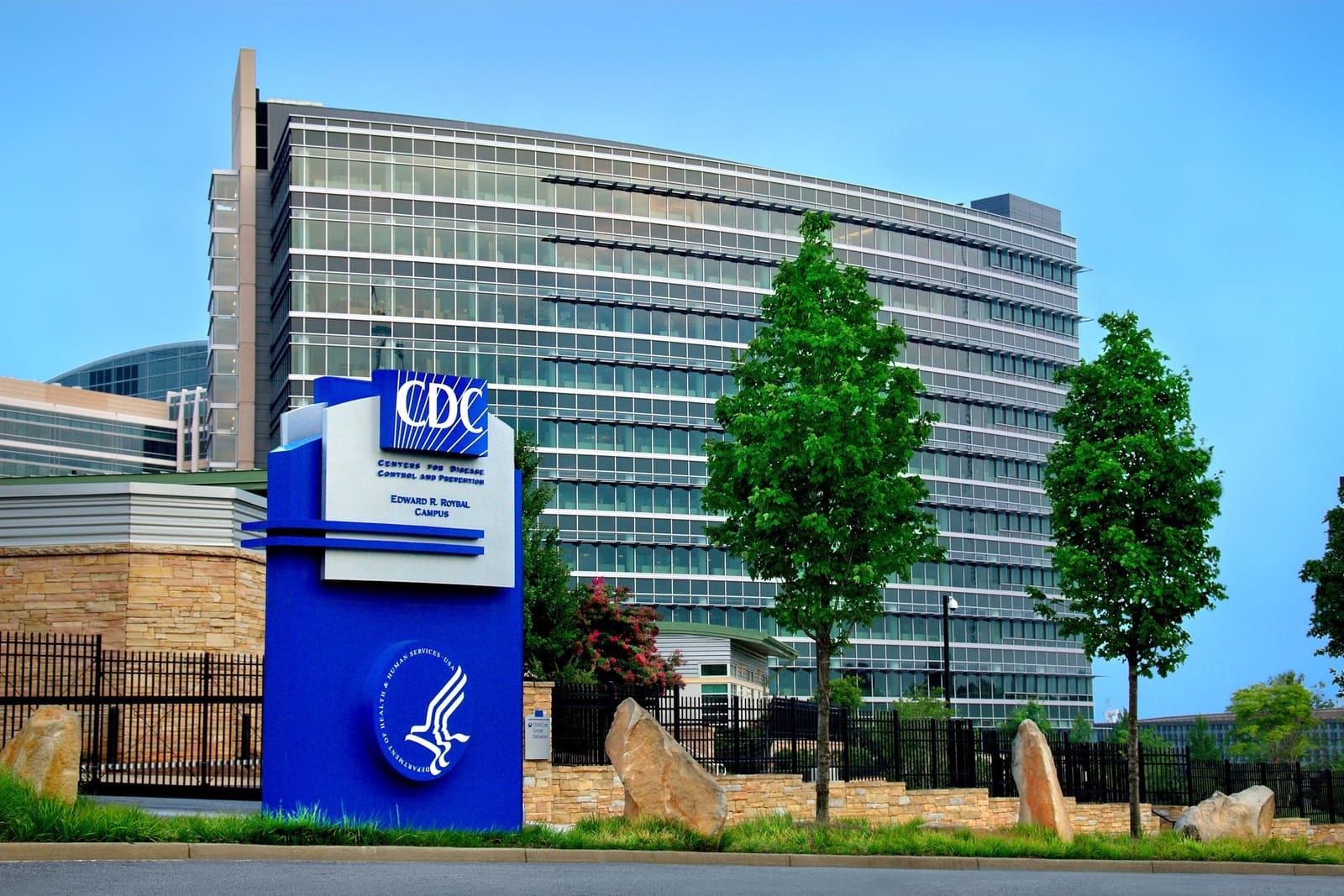
The CDC updated its measles dashboard on Friday and still does not count four deaths that Pennsylvania attributes to its outbreak. The Guardian's latest report27 was available to this review as headline and summary only, but the gap itself has been on the record since late August: CNN reported it on September 128, and STAT reported29 that the new CDC director delayed adding the deaths.
According to the Guardian, Health and Human Services Secretary Robert F. Kennedy Jr. has cast doubt on the deaths. Members of Congress have asked for a briefing.
The state health department that investigated the deaths attributes them to measles. The federal agency whose job is to aggregate state data declines to include them. When the aggregator overrules the investigator without publishing a reason, the national number stops being a measurement and becomes a position.
AI, Surveillance and the Xi Summit
A Reuters/Ipsos poll30 finds three in four Americans say AI companies are not doing enough to prevent disaster. That is a measure of public distrust, not of risk, but three in four is a large majority on any technology question.
Reuters also reports that the Chinese lab DeepSeek will brief the UN Security Council on AI this week. AI sits on the agenda for the Trump and Xi summit31, which opens Thursday after Xi arrives Wednesday, alongside trade and Iran. Reuters reports that Beijing added drug precursor chemicals to its export control list ahead of the meeting, a gesture toward Washington on fentanyl.
On the security side, Wired reports32 that Cisco Talos researchers found malware whose command system polls several commercial AI models and acts on their consensus, with no human in the loop (headline and summary only). The researchers could not say who built it or whether it has been used in the wild. It is an early and unattributed finding, and it should be read as one.
In Britain, Wired reports33 that the new prime minister, Andy Burnham, is under pressure from his own party to break Palantir's £330 million contract to run the National Health Service's patient data platform (headline and summary only). The fight is over who holds the most sensitive dataset a state keeps on its citizens, and whether that holder should be a private American defense contractor.
Closer to home, 404 Media is filing public records requests34 on how police departments use Axon's license plate cameras and is asking readers to file the same requests in their own cities. It is the constructive inverse of the day's theme: where a government declines to show what it collects, a records request is the tool that makes it show.
Also This Week
Missouri's map. A federal appeals court ruled in favor of the Trump-backed Missouri congressional map35 on Monday, with the Supreme Court set to have the final word. St. Louis Public Radio36 notes the ruling arrives with absentee ballots already in the mail, which means some voters are casting ballots in districts whose legality is still being decided.
Greenland. The United States, Denmark and Greenland are set to sign a security agreement at the UN on Tuesday37, according to France 24 and the Danish prime minister's office38. It gives the United States expanded and lasting military rights on the island while leaving sovereignty with Denmark. How the story was covered, and by whom, is addressed in the next section.
A subpoena request. The New York Post reports39 that a Republican senator wants the Senate Judiciary Committee to subpoena both Donald Trump Jr. and Hunter Biden, after reports that a Russian oligarch paid for part of Trump Jr.'s wedding festivities. For now this rests on a single outlet's account, available to this review as headline and summary only.
The Coverage Gap
This review reads a fixed set of feeds across the political press and compares what conservative outlets carried against what left and independent outlets carried. The comparison runs in both directions, and the direction that is unflattering to the left is stated first because it was the larger one this cycle.
What conservative outlets covered and left and independent outlets did not. The biggest gap is Greenland. A trilateral security deal giving the United States expanded, lasting military rights on the island is a major Arctic basing agreement by any standard. Fox News covered it40 as a win. National Review41 and The Dispatch42 took it seriously and more critically, with National Review arguing (as opinion) that the deal came at the cost of American credibility as an ally. The left and independent outlets tracked here had nothing on it, even though Danish and Greenlandic officials have spent months pushing back. A press that treats sovereignty, militarism and colonial legacies as core subjects missed a story that is about all three, and the sharpest criticism of the deal in the tracked feeds came from the right.
The second gap is the one that should sting most. The DoorDash settlement, $131.5 million recovered for delivery workers, reached this review through the New York Post. None of the left or independent feeds tracked here carried it. A labor win for app workers is precisely the story those outlets claim as their beat, and on this cycle a tabloid got there first.
The third is smaller and less settled: the Post's report of a Republican senator seeking subpoenas for Donald Trump Jr. and Hunter Biden. It is a single outlet's account and worth tracking rather than treating as established.
Not everything the right carried was a gap. Several items were framing more than news. The Washington Examiner revived the Minnesota child nutrition fraud case as an attack on Tim Walz. Coverage of Abdul El-Sayed's Senate campaign in Michigan leaned on his language about undocumented immigrants and on his outreach to Jewish voters. The New York Post and Fox both amplified New York Mayor Zohran Mamdani's call to arrest Benjamin Netanyahu. These are amplification of known facts, not missing facts, and they belong in a different column.
What left and independent outlets covered and conservative outlets did not. ProPublica's Collins investigation had no pickup on the conservative feeds tracked here. Neither did the CDC's measles count, the Escobar oversight dispute at Camp East Montana, the beating of deportees in Equatorial Guinea, or the Austin shooting. Of these, only the Austin shooting has broken through to national wire coverage. The rest remain, for now, stories a reader encounters only if their media diet already leans a particular way.
That list tracks the day's theme almost exactly. The stories conservative outlets skipped are the ones about the state withholding information: a corruption inquiry that stopped, deaths not counted, a congresswoman kept from detainees. An audience that relies on those outlets would not know the counting was in dispute.
Where there was no gap. The press ban is not a gap in either direction. Breitbart, the Daily Wire and Fox all covered it, and a Fox correspondent leads the association that condemned it. When the objection runs across the press, coverage does too.
What the press as a whole handled badly. Two structural failures cut across both sides. The first is volume mistaken for coverage. The press ban is the story that happened to the press, and it is the one story every side carried. The Collins inquiry and the measles count, which are about what the public is not being told, crossed over to neither side's audience. Loud agreement on one story is not the same as coverage of the pattern it belongs to. The second is that the Iran war is covered as a war and almost never as a price. Hormuz traffic at two vessels and a Saudi pipeline restarted to bypass the strait are cost-of-living stories for every household that buys fuel, and in the feeds tracked here they ran as war news on both sides.
Method
This review is built from an automated daily briefing. For this edition, 23 of 24 RSS feeds resolved; NPR failed on an HTML block page. The feed list was reconstructed from an earlier run's log after the configured copy went missing, so this edition's feed set may differ slightly from prior days'. The staging window for this edition was not recorded in its run notes, so none is claimed here.
Sources are weighted by how they were read. Left and independent outlets supplied 143 body items; right-leaning outlets supplied 89 detection items, used to identify what each side covered and ignored. Articles were read in full for ProPublica, PBS, Democracy Now, Drop Site, The Intercept, 404 Media, Jacobin and Fox. Reuters, AP, the Guardian, Wired and the New York Post were available as headline and summary only, because full text for the last three could not be retrieved; content retrieved around that block was discarded rather than used. Drop Site's war briefing was a podcast description only. Every claim sourced from a summary is marked as such in the text above.
Eighteen load-bearing claims were fact-checked live against independent reporting before publication: the press-ban lawsuit and hearing date, the Collins reporting, both accounts of the Austin shooting, the Escobar visit, the Equatorial Guinea arrests, the DoorDash figure, the Hormuz offer and traffic data, the Pentagon death count, the measles gap, the Reuters/Ipsos poll, the Greenland signing date, the Xi visit dates, and the Missouri ruling.
One attribution standard applies throughout. Claims about casualties, damage or wrongdoing are attributed to the government or party that made them, whichever government that is: the Pentagon's count and the Post's sources are both presented as claims, as are Iran's offer on Hormuz, DHS's dispute of Escobar's account, and federal officials' account of the Austin shooting. Opinion and analysis, from Jacobin, Vox and National Review, are labeled as argument.
This edition carried six corrections to the underlying briefing: three mechanical, including the DoorDash settlement figure corrected from $131 million to $131.5 million, and three judgment calls on framing and attribution.
Footnotes
42 footnotes, 42 unclassified.
A footnote carrying a classification was authored as a source record. The rest are the edition's own citations as published: outlet and address as they stood, with no classification, attribution posture or reading depth on record.
- 1
NPR (opens in a new tab)npr.org
On Friday, September 18, President Trump barred CNN, MS NOW and Politico from White House grounds, as NPR reported at the time.
- 2
CNBC (opens in a new tab)cnbc.com
CNBC confirms a hearing is set for Wednesday
- 3
PBS NewsHour (opens in a new tab)pbs.org
declined to cover the president at all
- 4
The Guardian (opens in a new tab)theguardian.com
news outlets suspending coverage of the president
- 5
Breitbart (opens in a new tab)breitbart.com
Breitbart reports is branded Trump TV
- 6
Democracy Now! (opens in a new tab)democracynow.org
Katie Fallow, a lawyer at the Knight First Amendment Institute, told Democracy Now that the message to reporters is plain: write critically and you lose access.
- 7
ProPublica (opens in a new tab)propublica.org
The most substantial piece of original reporting in this cycle is ProPublica's account of an FBI anti-corruption squad building a case around Senator Susan Collins of Maine before…
- 8
Maine Public (opens in a new tab)mainepublic.org
The story was also carried by Maine Public, which confirms it independently of ProPublica's own site.
- 9
Vox (opens in a new tab)vox.com
Collins is up for reelection in November, and Vox argues that her race is the abortion rights movement's biggest test of the cycle.
- 10
The Texas Tribune (opens in a new tab)texastribune.org
The Texas Tribune and CNN both reported the shooting and its aftermath.
- 11
CNN (opens in a new tab)cnn.com
The Texas Tribune and CNN both reported the shooting and its aftermath.
- 12
The Guardian (opens in a new tab)theguardian.com
Representative Veronica Escobar told the Guardian that ICE kept her from speaking with any detainees during an oversight visit last month to Camp East Montana, the tent camp on…
- 13
Office of Representative Veronica Escobar (opens in a new tab)escobar.house.gov
office has published its own account
- 14
ABC News (opens in a new tab)abcnews.com
The Associated Press and Democracy Now report that two men deported to Equatorial Guinea, both of whom had won protection from removal in American immigration courts, were…
- 15
Democracy Now! (opens in a new tab)democracynow.org
The Associated Press and Democracy Now report that two men deported to Equatorial Guinea, both of whom had won protection from removal in American immigration courts, were…
- 16
The Intercept (opens in a new tab)theintercept.com
The Intercept supplies the other half of the picture: how arbitrary the win itself can be.
- 17
Drop Site News (opens in a new tab)dropsitenews.com
Drop Site News carried the Austin shooting in its daily roundup alongside the UN week, which is roughly the right frame: enforcement at home and diplomacy abroad running in the…
- 18
New York Post (opens in a new tab)nypost.com
New York Post first put the figure at $131 million
- 19
ABC7 New York (opens in a new tab)abc7ny.com
The New York Post first put the figure at $131 million (headline and summary only); ABC7 New York and DoorDash's own statement give the precise number.
- 20
DoorDash (opens in a new tab)about.doordash.com
DoorDash's own statement
- 21
The Irish Times (opens in a new tab)irishtimes.com
That offer comes through a senior Iranian official quoted by Reuters, as carried by the Irish Times, and should be read as a government's negotiating position rather than a…
- 22
Investing.com (opens in a new tab)investing.com
Traffic through the strait has fallen to two vessels, according to shipping data cited by Reuters.
- 23
The Washington Post (opens in a new tab)washingtonpost.com
On the cost to Americans, the Washington Post reported last week that more American troops have died amid the war than the Pentagon has publicly disclosed; Reuters' summary of the…
- 24
WHBL (opens in a new tab)whbl.com
Reuters' summary of the Post's report
- 25
Drop Site News (opens in a new tab)dropsitenews.com
Drop Site and Forensic Architecture document
- 26
Jacobin (opens in a new tab)jacobin.com
Jacobin argues that American sanctions on the Palestinian rights groups Al-Haq, Al Mezan and the Palestinian Centre for Human Rights punish the people documenting abuses rather…
- 27
The Guardian (opens in a new tab)theguardian.com
Guardian's latest report
- 28
CNN (opens in a new tab)cnn.com
The Guardian's latest report was available to this review as headline and summary only, but the gap itself has been on the record since late August: CNN reported it on September…
- 29
STAT (opens in a new tab)statnews.com
The Guardian's latest report was available to this review as headline and summary only, but the gap itself has been on the record since late August: CNN reported it on September…
- 30
U.S. News and World Report (opens in a new tab)usnews.com
Reuters/Ipsos poll
- 31
Wikipedia (opens in a new tab)en.wikipedia.org
Trump and Xi summit
- 32
Wired (opens in a new tab)wired.com
On the security side, Wired reports that Cisco Talos researchers found malware whose command system polls several commercial AI models and acts on their consensus, with no human…
- 33
Wired (opens in a new tab)wired.com
In Britain, Wired reports that the new prime minister, Andy Burnham, is under pressure from his own party to break Palantir's £330 million contract to run the National Health…
- 34
404 Media (opens in a new tab)404media.co
404 Media is filing public records requests
- 35
PBS NewsHour (opens in a new tab)pbs.org
ruled in favor of the Trump-backed Missouri congressional map
- 36
St. Louis Public Radio (opens in a new tab)stlpr.org
St. Louis Public Radio notes the ruling arrives with absentee ballots already in the mail, which means some voters are casting ballots in districts whose legality is still being…
- 37
France 24 (opens in a new tab)france24.com
set to sign a security agreement at the UN on Tuesday
- 38
Danish Prime Minister's Office (opens in a new tab)stm.dk
The United States, Denmark and Greenland are set to sign a security agreement at the UN on Tuesday, according to France 24 and the Danish prime minister's office.
- 39
New York Post (opens in a new tab)nypost.com
The New York Post reports that a Republican senator wants the Senate Judiciary Committee to subpoena both Donald Trump Jr. and Hunter Biden, after reports that a Russian oligarch…
- 40
Fox News (opens in a new tab)foxnews.com
Fox News covered it as a win.
- 41
National Review (opens in a new tab)nationalreview.com
National Review and The Dispatch took it seriously and more critically, with National Review arguing (as opinion) that the deal came at the cost of American credibility as an ally.
- 42
The Dispatch (opens in a new tab)thedispatch.com
National Review and The Dispatch took it seriously and more critically, with National Review arguing (as opinion) that the deal came at the cost of American credibility as an ally.