Issue 11 of The Open Record
The Government Does Not Build Its Surveillance. It Rents It.
An ICE contract with LexisNexis feeding a Palantir platform, a Defense Policy Board stocked with investors in the firms it advises on, and a hospital chain that cleared $6.8 billion in profit while its housekeepers make $16.80 an hour.
Daily news review for Tuesday, August 11, 2026. Every source is footnoted. A note on method is at the bottom.

0% read, about 22 min remaining
The thread running through August 11 is ownership. Who owns the data the state uses to find people. Who owns the companies the Pentagon buys from, and who sits on the board that advises the buying. Who owns the hospital where the woman cleaning the rooms decides between the water bill and the gas bill.
Three of the day's strongest stories are the same story at different scales. Immigration and Customs Enforcement is paying a data broker for the raw material of enforcement. The Defense Secretary's new advisory board seats men whose fund co-invests in defense contractors alongside the president's son. A hospital operator authorized a $10 billion stock buyback while its union bargained for a $25 floor. Underneath all of it, a fault line in western Colombia that owned nothing and took everything anyway.
Colombia's Earthquake Is Still Moving, and So Is the Count
A magnitude 7.4 earthquake struck western Colombia on Monday, epicenter at San Jose del Palmar in the Choco region, roughly 400 kilometers west of Bogota. The toll moved fast enough that the number depends on when it was taken: PBS NewsHour1 aired "at least 111" on Monday, Al Jazeera2 counted 132 confirmed dead on Tuesday with about 40 in Risaralda around Pereira and 35 in Cali, and Reuters, via CNBC3, put it at 164 and expected to rise.
More than 2,700 people are listed as missing on citizen-run registries. That is not a confirmed count. It is a plea for information, and the distance between it and the official toll is where the real number will be found.
Aid had not reached the epicenter as of Tuesday morning. President Abelardo de la Espriella, three days into the job after his Friday inauguration, declared a national state of emergency, sent roughly 1,000 security force members to Cali, imposed nighttime curfews, put five city hospitals on red alert, and suspended airport operations for inspection. PBS showed Cali's own emergency services building shedding concrete onto the ambulances parked below, a hard image for what a state can and cannot do in the first 48 hours.
Hormuz Hardened, and the Only Confirmed Number Is the Price
The standoff over the Strait of Hormuz did not break. It set. Iran attached preconditions to reopening it: lift the naval blockade, remove sanctions, release frozen assets, pay for war damage, and stop attacking Iran-aligned forces including Hezbollah. Foreign Ministry spokesman Esmaeil Baghaei said that as long as United States violations continue, conditions will not exist to call the strait a safe waterway, PBS NewsHour reported4.
Trump dismissed the reparations demand and said the United States should be paid instead for damage Iranian weapons have done over 50 years. He told Axios that Washington is, in his words, low-keying it and only semi-negotiating, a line Drop Site News5 tracked alongside Foreign Minister Abbas Araghchi's account: no direct talks, only messages through intermediaries, and an Iran-Oman framework close to done that would not fully reopen the strait.
The asymmetry in what can be checked is worth stating. The preconditions are Iran's own position, on the record. Casualty claims on both sides come from the governments that made them and have not been independently confirmed. What is documented is the market: oil rose more than 2% and Wall Street futures went flat, per CNBC6.
Yemen is the second front and the more dangerous one. Iran-aligned Houthi forces struck a Saudi Aramco refinery on Sunday, two days after Saudi Arabia signed a defense pact with Turkey and Pakistan in Mecca, and hit the port of Mocha near the Bab al-Mandab Strait, killing at least seven people according to Democracy Now7. The Yemeni government says the struck sites were camps for displaced civilians, which is that government's characterization. The United Nations warned the strikes threaten to restart the Houthi-Saudi war after roughly four years of tentative ceasefire. Analyst Mohammed Al-Basha called it missile and drone diplomacy: military tactics used as a negotiating instrument.
Netanyahu Rejected the Plan the White House Is Backing
Prime Minister Benjamin Netanyahu formally rejected the 15-point roadmap backed by the White House and its Board of Peace, insisting Hamas fully disarm before any Israeli withdrawal rather than in tandem as the plan required, ABC News reported8. He said that as long as he is prime minister, a Palestinian state will not be established. Hamas reaffirmed its commitment to the plan. The Gaza Health Ministry puts the cumulative toll at 73,386 killed and 174,256 injured since October 7, 2023, including more than 1,200 killed since the October ceasefire. Those are ministry figures.
Vox ran an argument9, not a report, and it deserves reading as argument: cutting United States military aid would be a real rupture but would win Washington little, because Israel spent roughly 7.9% of gross domestic product on its military last year including American aid and would need about 8.5% to hold that level without it. Whether that framing is right is contested. The arithmetic is the strongest part of the case.
The Drone War Reached 800 Kilometers into Russia
A Ukrainian drone strike on Nizhnekamsk in Tatarstan killed 13 people including a child and injured 39, according to Russian regional authorities. The target was Tatneft's TANECO refinery, roughly 800 kilometers east of Moscow. CNN10 called it the deadliest such strike inside Russia in two years; Al Jazeera11 carried the same toll. Separately, Russian strikes killed three in Kharkiv and wounded 37.
The same rule applies in both directions. These are casualty figures issued by the governments being struck, and neither set has been independently verified.
ICE Is Not Building a Surveillance Database. It Is Renting One.
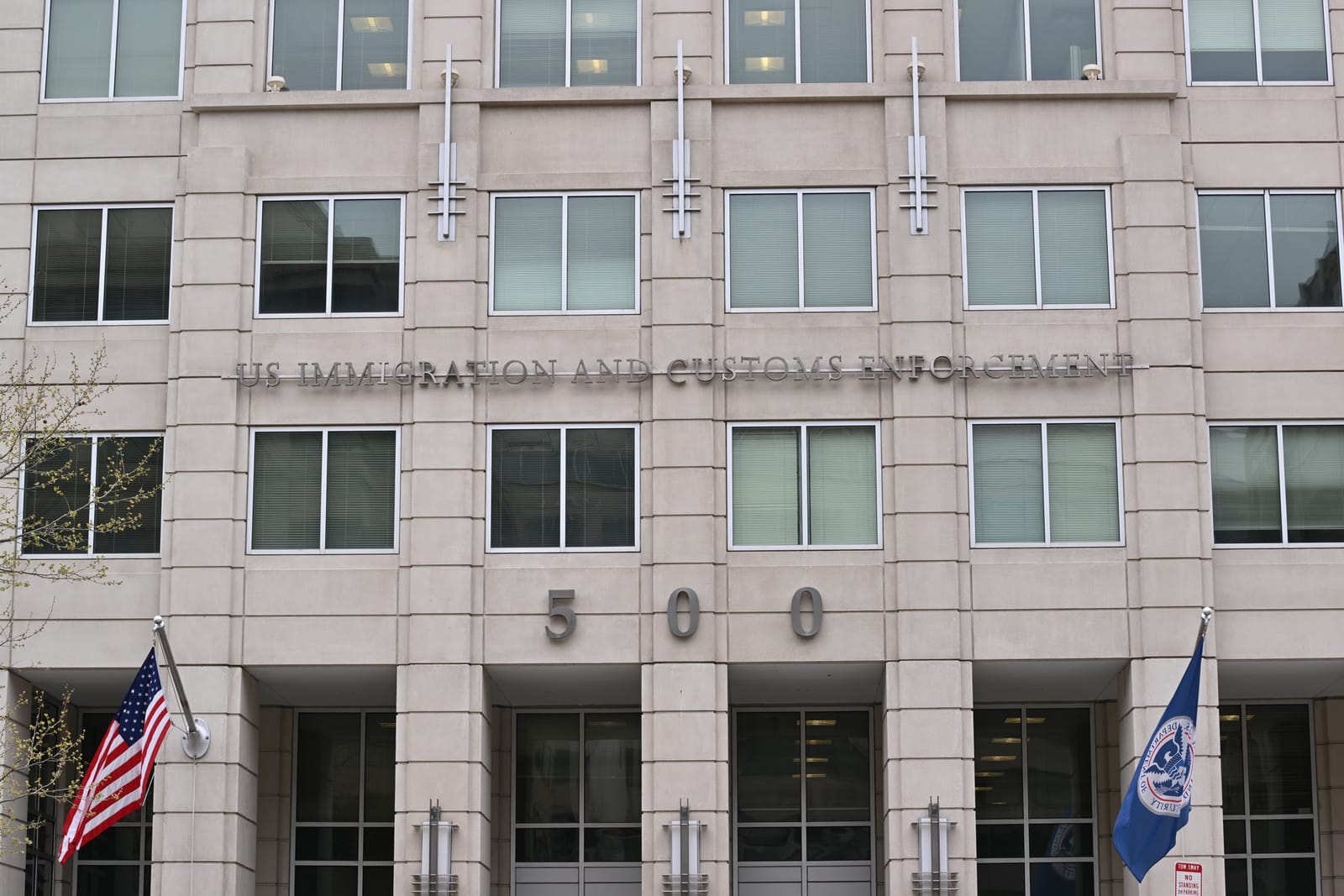
The day's best reporting landed on procurement. 404 Media12 obtained records showing ICE plans to pay LexisNexis roughly $6.7 million for continued data access, with the procurement language requiring the database connect by application programming interface to ICE systems including the Palantir platform and PenLink. The named tools are LexID and Accurint Virtual Crime Center, which the document describes as linking more than 82 billion public and proprietary records from over 10,000 sources. The requirements include an artificial intelligence system to infer the identity of an end user and bulk facial recognition across large image databases, open-source media among them.
404 Media reported in January on a Palantir-built ICE system called ELITE that assigns a confidence score to a person's current address and draws on sources including the Department of Health and Human Services. Whether this LexisNexis feed goes into ELITE is not established. The shape of the arrangement is: the capability is procured rather than constructed, and procurement is where accountability thins out. A database the government builds is subject to records law and oversight. A subscription is a line item.
The demand behind that line item is not small. ICE made about 51,000 arrests in July, the highest single month in Department of Homeland Security history, ABC News reported13. CoreCivic and the GEO Group together booked $1.4 billion in revenue for the April through June quarter, per NPR14. Two federal judges cleared the way for terminating temporary protected status for more than 200 South Sudanese nationals and roughly 4,000 Burmese. The Associated Press found more than 50 parents and spouses of active-duty American military personnel detained, at least six deported. In Houston, rallies marked one month since ICE agents killed 52-year-old Lorenzo Salgado Araujo on July 7. The agents have not been identified.
The Surveillance Economy Also Loses Contracts
Two pieces of reporting from the same day show the industry losing.
404 Media profiled Stephen Tyler Holman15, mayor of Norman, Oklahoma, whose city council rejected two separate pitches from the license-plate-camera company Flock. Holman's objection was procedural rather than sentimental: where the data lives, how long it is kept, who can reach it, and the fact that the system collects on every vehicle regardless of whether the driver has done anything. More than 80 cities have now canceled Flock contracts.
A joint investigation by Proof News and 404 Media16 found the security robot business contracting, with at least 13 of 21 identified deployments since 2015 now ended. Knightscope, the largest player, carries $273 million in debt per its most recent quarterly filing and has responded by buying a human security guard company. Dublin, Ohio pulled its robot in May after less than 10 months because, per the city, it identified no criminal incidents and produced no tickets or arrests. Law professor Andrew Ferguson called the machines security theater.
Meta's Open-Source Case and the Interest Behind It Are One Object
Meta released an open-source model called Muse Glimmer, licensed permissively and built to run on a personal computer, alongside a more capable model, Muse Spark 1.2, available through Meta, PBS NewsHour reported17. Mark Zuckerberg published a long essay arguing that if superintelligence ends up controlled by a select few individuals, businesses, or governments, the outcomes will be worse for everyone else. He also urged the United States and its allies to accelerate energy and infrastructure buildout against China and asked regulators to loosen restrictions on distillation, the practice of training weaker models on the outputs of stronger ones. The AP wire story18 named both models; PBS named only Muse Glimmer.
New York Times correspondent Mike Isaac, speaking on PBS, said Meta is behind in the race despite billions spent on data centers and talent, and that flooding the field with open models is a catch-up strategy. Both things hold at once: the concentration critique is real, and the company making it benefits from making it.
More than 1,300 researchers and engineers at frontier labs have signed a letter warning about the pace of the race. The Guardian ran a column on it by Stuart Russell19, but the page would not load on two attempts, so nothing beyond the headline and summary is asserted here.
An Executive Order Against the Childhood Schedule
Trump signed an executive order Monday calling for fewer recommended childhood vaccines and for spacing shots across separate visits, including splitting the measles, mumps, and rubella vaccine into three separate shots, PBS reported20. Individual measles, mumps, and rubella vaccines are not currently available in the United States. The order directs the Department of Health and Human Services to reassess vaccine timing and sequencing.
There is no ambiguity to preserve on the science. Decades of research, including studies of hundreds of thousands of children, found no causal link between vaccines and autism, as CNBC noted21 in reporting the order. Trump has said his position is based on what he feels.
Three Primaries Testing What Each Party Thinks Is Possible
In Wisconsin, democratic socialist state lawmaker Francesca Hong led a four-way Democratic primary for governor in the final Marquette Law School poll, with a large share of voters undecided, The Guardian reported22. Her platform includes childcare for all, free school meals, and a one-year moratorium on new data center construction. Outgoing Governor Tony Evers endorsed Milwaukee County Executive David Crowley, who left the race and reentered on July 18. The closing week's attack line was a deleted 2020 tweet in which Hong said to cancel Thanksgiving. The Intercept argued23, as opinion, that reaching for a six-year-old holiday tweet is what running out of policy arguments looks like. The Republican nominee is Representative Tom Tiffany, who voted against certifying the 2020 election.
In Minnesota24, Lieutenant Governor Peggy Flanagan faced Representative Angie Craig for the Democratic Senate nomination, a race shaped by immigration enforcement and by Craig's vote for the Laken Riley Act, which she has since called the wrong decision. Mike Lindell carried Trump's endorsement in a three-way Republican governor's primary despite the state party chair calling the endorsement a surprise and citing significant electability concerns.
In South Carolina25, ten Republicans compressed a year of campaigning into two weeks for the special primary to replace Senator Lindsey Graham, who died on July 11. His sister Darline, appointed interim senator, has Trump's endorsement. If nobody clears a majority, the top two go to an August 25 runoff.
A Former Defense Lawyer Takes the Justice Department
Todd Blanche was sworn in Monday as attorney general after a 50-49 Senate confirmation early Saturday, with Republicans Susan Collins and Lisa Murkowski voting no, the AP reported via PBS26. Blanche is Trump's former personal lawyer and had run the department in an acting capacity since Pam Bondi was fired in April. His nomination cleared only after he confirmed in writing that plans for a $1.8 billion fund to compensate Trump allies were being rescinded. The oath was administered by Emil Bove, another former Trump attorney now sitting as a federal appeals judge.
Trump also issued a second birthright citizenship order last week, narrower than the first. It targets United States-born children of two non-citizen parents where a parent is tied to a designated foreign terrorist organization, children of foreign government employees without diplomatic immunity, and children whose parents engaged in a commercial transaction to place the mother in the country for the birth. The Supreme Court struck down the first order this year in Trump v. Barbara, with four justices dissenting and each writing separately. Vox's Ian Millhiser reads27 the new order as a test of whether one vote from that majority can be flipped. That is analysis, not a finding.
The Defense Policy Board and the Money Around It
Defense Secretary Pete Hegseth's appointments to the reconstituted Defense Policy Board include Marc Andreessen and Blake Masters, both tied to 1789 Capital, the fund where Donald Trump Jr. is a partner, The Guardian reported28. Comparing 1789's reported holdings against Andreessen Horowitz's published list, the Guardian found the two firms co-invested in at least five companies, three of them with significant defense business: Anduril, Hadrian, and SpaceX.
The contract figures are the Guardian's, sourced to CNN and company disclosures. Anduril was awarded roughly $1.25 billion in federal money during the first 500 days of this term, up from about $760 million in the comparable Biden stretch. Hadrian won a Navy partnership worth up to $900 million in March. SpaceX took a $4.16 billion missile-tracking satellite contract weeks before a planned public offering.
The board has a record on this. In 2003, an investigation found at least nine of its 30 members had ties to defense contractors holding billions in Pentagon business, and its chairman resigned. Scott Amey of the Project on Government Oversight put the question directly: are these people there to serve, or to learn what gives their clients an edge.
William D. Hartung, writing as commentary for The Intercept via TomDispatch29, made a parallel argument about the China posture and its cost to Hawai'i, drawing his figures from an Institute for Policy Studies report.
$6.8 Billion in Profit, $16.80 an Hour
Workers at HCA Healthcare, the largest for-profit hospital operator in the country, are picketing across California, Texas, Nevada, and Florida during contract talks. The Service Employees International Union represents 22,000 HCA workers at the table and is asking for a path to a $25 hourly minimum, cost-of-living raises, and paid leave.
Esther Reyes, a single mother of three who cleans rooms at HCA's Las Palmas hospital in El Paso, makes $16.80 an hour and told The Guardian30 she decides some months whether to pay the water bill or the gas bill. Reading company filings, the Guardian reported HCA cleared $6.8 billion in profit last year, up 17.8%, and authorized a $10 billion buyback in early 2026. Chief executive Sam Hazen made more than $26.5 million in 2025, 420 times the median employee's $62,955.
HCA says the dispute is about compensation and that framing it as patient safety is inaccurate. Nurse Jody Domineck, 20 years at HCA's Sunrise hospital in Las Vegas, described walking away from a parent crying alone in a hallway because she had other patients waiting.
Two ProPublica Investigations, One of Them About How Investigations Happen
In Omaha, ProPublica and the Flatwater Free Press31 tested soil at 388 homes inside the country's largest residential lead Superfund site and found 208 above 100 parts per million, the level the Environmental Protection Agency's own risk model identifies as necessary to protect most children under current health guidance. The agency's cleanup trigger in Omaha is 400 parts per million, set in 2009 on health recommendations from 1994 and untouched for 17 years. An internal agency email from March 2024 put 84% of the site, more than 36,000 properties, above 100. Last year the administration raised the lowest federal screening level from 100 to 200, describing it as a way to speed cleanups of the worst areas. Natalie Thorpe, an Omaha teacher whose daughter tested high for lead as a baby, said it feels like being a sitting duck.
Separately, ProPublica developer Al Shaw documented what has happened to the Freedom of Information Act pipeline32: more than 600 government information specialists have resigned or been fired since the start of this administration, the Office of Personnel Management's backlog ended fiscal 2025 above 1,600 requests, seven times the prior year, and average processing for a simple request has passed 84 days. That is not a story about paperwork. It is the mechanism by which everything above gets documented, and it is corroding.
The Hottest Month in 131 Years of Records
The National Oceanic and Atmospheric Administration says the contiguous United States just had its hottest month on record, the AP reported via PBS33. July averaged 76.89 degrees Fahrenheit across the Lower 48, beating July 1936 of the Dust Bowl by an eighth of a degree in records going back to 1895. Every one of the Lower 48 states ran at least one degree above the 20th century average.
The largest driver was nighttime lows, which broke the old record by seven tenths of a degree. Hotter nights matter most for heat deaths, because the body never gets to reset. Meteorologist Jeff Masters said this may be one of the coolest years anyone alive will experience again. In Europe, drought has dropped the Danube and the Rhine to record lows, exposing sunken warships and, in one stretch, the bones of a mammoth.
Election Security, 85 Days Out
With 85 days to the midterms, the Cybersecurity and Infrastructure Security Agency held its first broad call with state election officials this cycle, hosted by the National Association of Secretaries of State. Three people on the call told PBS NewsHour34 it delivered standard offers and little else. One asked why states should trust an agency whose Homeland Security secretary recently threatened to prosecute election officials who did not cooperate. Another called it security theater. Those characterizations belong to the officials who made them.
The agency has lost roughly a third of its workforce this term, the Foreign Malign Influence Center has been gutted, and the Federal Bureau of Investigation has cut back its election work.
Also This Week
Assad sentenced in absentia. A Damascus court sentenced former Syrian president Bashar al-Assad to death in absentia on Tuesday, along with eight others including Atef Najib, for crimes against humanity, per NPR35. Assad remains in Russia. A death sentence for a man beyond reach is a legal instrument aimed at the record rather than the man.
2,000 dead of Ebola in Congo. The Democratic Republic of Congo's government says 2,000 people have now died in an outbreak the World Health Organization describes as the fastest-growing on record, the AP reported via NBC News36. The toll is the government's figure; the characterization is the WHO's. On a slower day it would have led.
The decoy flight. The Washington Post and the New York Times reported that Trump left Turkey in July on a secret military flight while the White House said he was aboard Air Force One, moved between planes by an airport catering truck after what a United States official described as a credible Iran-linked threat. The Guardian summarized the reporting37.
Trump Media's quarter. The company reported a quarterly loss of $238 million on $1.7 million in revenue, up from a $20 million loss a year earlier.
The Coverage Gap
Comparing what conservative outlets carried against what left and independent outlets carried, on the same day, produces a two-way diff. Both directions are instructive, and the direction unflattering to the left is the more useful one.
Start there. Four stories ran prominently on the right and were absent or nearly absent from left and independent feeds, and each survives independent verification, which is what separates a gap from an amplification campaign.
Infrastructure security is the clearest. The Dispatch led with the spread of hacks on American water systems. CNN38 and CBS News39 confirm it: the FBI says municipal water systems in at least seven states were targeted, and subsequent reporting has put the number at 12, with officials pointing to possible Iran-linked actors. Left and independent outlets touched this only in passing, inside segments about something else. For anyone tracking digital sovereignty, the story of the week was sitting in a right-leaning newsletter.
Currency is the second. The Dispatch also led with Treasury Secretary Scott Bessent's yen intervention. Confirmed by CNBC40 and Bloomberg: Treasury intervened alongside the Bank of Japan to reverse months of yen losses, and Bessent has been pushing the Federal Reserve to expand a dollar backstop facility for Japan. Outlets that treat finance as a specialist beat keep missing the moments when American state power is exercised through currency rather than troops.
Munitions is the third. National Review and Fox both ran the Pentagon's procurement surge, with the fiscal 2027 budget sharply increasing interceptor buys after the Iran war drew down stockpiles. Left outlets carried the critique of the China posture, in the Intercept's Hawai'i commentary, but not the purchase orders. Criticizing the war economy while skipping the invoice is arguing with a ghost.
The fourth is a policy defeat rather than a manufactured one. Breitbart and the Daily Wire ran a Staten Island judge blocking New York Mayor Zohran Mamdani's pied-a-terre tax after homeowners sued. CNN confirms41 the temporary restraining order and the city's plan to appeal. Left feeds did not carry it. When a flagship progressive administration loses in court and the news arrives from Breitbart first, the failure is on the side that skipped it.
Some of what dominated conservative outlets is framing rather than reporting, and should be read that way. Fox, Breitbart, and the New York Post ran heavy saturation on a WNBA dispute over a player's post about white privilege. The Guardian ran a column on the same underlying conflict from the opposite direction, which makes it a shared story with inverted framing rather than a gap. The New York Post pushed newly obtained Anthony Fauci text messages and Breitbart pushed declassified records on an old FBI probe of Jeff Sessions. Both are retrospective grievance material timed to the vaccine order's political flank. The timing carries the meaning, not the content.
One inversion is worth naming for what it says about the model itself. The Washington Examiner reported the arrest of Representative Lauren Boebert's 21-year-old son on child sexual exploitation charges, and left feeds did not carry it. A conservative outlet running a story damaging to a Republican, while the other side skips it, is a reminder that the right-leaning press is not a single propaganda instrument and that a left reading list is not a completeness guarantee.
Now the other direction, which is larger. Several of the day's strongest stories appear nowhere in conservative feeds. The ICE contract with LexisNexis feeding a Palantir platform: nothing. ProPublica's Omaha lead findings and the collapse of the FOIA pipeline: nothing. HCA workers picketing a company with $6.8 billion in profit: nothing. The Guardian on Defense Policy Board appointees tied to a fund where the president's son is a partner: nothing, which is the most predictable silence on the list. The record hottest July: nothing. Two thousand dead of Ebola in Congo: nothing.
That last absence is not ideological. Foreign death tolls disappear across the entire American press, left outlets included, and it is visible on this particular day only because the wires happened to carry it.
Two structural notes apply to both sides. Saturation is not coverage: a story run 40 times in one week by outlets sharing a wire feed is one story, and volume gets mistaken for corroboration in both directions. And the Hormuz standoff was covered nearly everywhere as a war and almost nowhere as a price, even though the confirmed, checkable fact of the day was a 2% move in oil and a flat futures market. A war covered only as a war leaves out the part that reaches most people.
Convergence deserves a line too. The decoy plane, the vaccine order, the Blanche swearing-in, the Wisconsin primary, and the Colombia earthquake ran on both sides. When a story crosses that line, the disagreement is about meaning rather than facts, and those are the arguments worth having.
What to Watch
The Colombia toll will rise, and the space between the confirmed count and the 2,700 names on citizen missing lists is where the real figure sits. Whether aid reaches San Jose del Palmar is the test that matters, because a state's competence shows up in the second week rather than the first. The Iran-Oman framework is the hinge on the Gulf: if it lands, oil retreats and the fight moves to a table, and if it stalls, Yemen escalates and the Bab al-Mandab becomes the story. Wisconsin's returns move the Democratic Party's sense of its own ceiling either way.
Two documents are worth waiting for. One is an on-record federal attribution for the water system intrusions, along with the question of who is left at CISA to issue it. The other will not arrive as a press release. It will arrive as a contract award with a familiar name on it.
Method
This edition was assembled from a staged RSS pass across 24 feeds inside a 36-hour window. Twenty-three resolved, yielding 145 body items and 87 detection items; the NPR feed failed with malformed XML and is flagged for repair.
Source weighting is explicit. Article bodies were read in full for the reporting spine. Reuters and AP arrive through news-aggregator bridges and are headline-only by design, as are The Atlantic and Wired. The Guardian's Stuart Russell column would not load and is used on headline and summary only, which is stated where it appears.
Every figure, date, toll, and officeholder was checked against live web search before publication. Corrections this run: three mechanical and two judgment calls. The judgment calls were the Colombia earthquake toll, where PBS's on-air 111 was superseded by 132 at Al Jazeera and 164 at Reuters within a day, and the article carries the Reuters figure with the Al Jazeera figure named beside it; and the Blanche compensation fund, where sources split between $1.8 billion and $1.776 billion, and the article uses the AP number.
Attribution runs to one standard. Government claims about casualties, damage, or fraud are attributed to the government that made them, whether that government is Iran, the United States, Israel, Russia, Ukraine, Yemen, or Congo. Opinion columns and analysis pieces are labeled as argument, never as reported fact. Every item promoted from the detection feed into the coverage gap section was independently confirmed before being called a gap; items that turned out to be amplification are named as amplification.
Footnotes
41 footnotes, 41 unclassified.
A footnote carrying a classification was authored as a source record. The rest are the edition's own citations as published: outlet and address as they stood, with no classification, attribution posture or reading depth on record.
- 1
PBS NewsHour (opens in a new tab)pbs.org
The toll moved fast enough that the number depends on when it was taken: PBS NewsHour aired "at least 111" on Monday, Al Jazeera counted 132 confirmed dead on Tuesday with about…
- 2
Al Jazeera (opens in a new tab)aljazeera.com
The toll moved fast enough that the number depends on when it was taken: PBS NewsHour aired "at least 111" on Monday, Al Jazeera counted 132 confirmed dead on Tuesday with about…
- 3
CNBC (opens in a new tab)cnbc.com
The toll moved fast enough that the number depends on when it was taken: PBS NewsHour aired "at least 111" on Monday, Al Jazeera counted 132 confirmed dead on Tuesday with about…
- 4
PBS NewsHour (opens in a new tab)pbs.org
Foreign Ministry spokesman Esmaeil Baghaei said that as long as United States violations continue, conditions will not exist to call the strait a safe waterway, PBS NewsHour…
- 5
Drop Site News (opens in a new tab)dropsitenews.com
He told Axios that Washington is, in his words, low-keying it and only semi-negotiating, a line Drop Site News tracked alongside Foreign Minister Abbas Araghchi's account: no…
- 6
CNBC (opens in a new tab)cnbc.com
What is documented is the market: oil rose more than 2% and Wall Street futures went flat, per CNBC.
- 7
Democracy Now! (opens in a new tab)democracynow.org
Iran-aligned Houthi forces struck a Saudi Aramco refinery on Sunday, two days after Saudi Arabia signed a defense pact with Turkey and Pakistan in Mecca, and hit the port of Mocha…
- 8
ABC News (opens in a new tab)abcnews.com
Prime Minister Benjamin Netanyahu formally rejected the 15-point roadmap backed by the White House and its Board of Peace, insisting Hamas fully disarm before any Israeli…
- 9
Vox (opens in a new tab)vox.com
Vox ran an argument, not a report, and it deserves reading as argument: cutting United States military aid would be a real rupture but would win Washington little, because Israel…
- 10
CNN (opens in a new tab)cnn.com
CNN called it the deadliest such strike inside Russia in two years; Al Jazeera carried the same toll.
- 11
Al Jazeera (opens in a new tab)aljazeera.com
CNN called it the deadliest such strike inside Russia in two years; Al Jazeera carried the same toll.
- 12
404 Media (opens in a new tab)404media.co
The day's best reporting landed on procurement. 404 Media obtained records showing ICE plans to pay LexisNexis roughly $6.7 million for continued data access, with the procurement…
- 13
ABC News (opens in a new tab)abcnews.com
ICE made about 51,000 arrests in July, the highest single month in Department of Homeland Security history, ABC News reported.
- 14
NPR (opens in a new tab)npr.org
CoreCivic and the GEO Group together booked $1.4 billion in revenue for the April through June quarter, per NPR.
- 15
404 Media (opens in a new tab)404media.co
profiled Stephen Tyler Holman
- 16
404 Media (opens in a new tab)404media.co
A joint investigation by Proof News and 404 Media found the security robot business contracting, with at least 13 of 21 identified deployments since 2015 now ended.
- 17
PBS NewsHour (opens in a new tab)pbs.org
Meta released an open-source model called Muse Glimmer, licensed permissively and built to run on a personal computer, alongside a more capable model, Muse Spark 1.2, available…
- 18
ABC News (opens in a new tab)abcnews.com
AP wire story
Archived copy (opens in a new tab)captured Aug 10, 2026
- 19
The Guardian (opens in a new tab)theguardian.com
a column on it by Stuart Russell
- 20
PBS NewsHour (opens in a new tab)pbs.org
Trump signed an executive order Monday calling for fewer recommended childhood vaccines and for spacing shots across separate visits, including splitting the measles, mumps, and…
- 21
CNBC (opens in a new tab)cnbc.com
Decades of research, including studies of hundreds of thousands of children, found no causal link between vaccines and autism, as CNBC noted in reporting the order.
- 22
The Guardian (opens in a new tab)theguardian.com
In Wisconsin, democratic socialist state lawmaker Francesca Hong led a four-way Democratic primary for governor in the final Marquette Law School poll, with a large share of…
- 23
The Intercept (opens in a new tab)theintercept.com
The Intercept argued, as opinion, that reaching for a six-year-old holiday tweet is what running out of policy arguments looks like.
- 24
The Guardian (opens in a new tab)theguardian.com
In Minnesota, Lieutenant Governor Peggy Flanagan faced Representative Angie Craig for the Democratic Senate nomination, a race shaped by immigration enforcement and by Craig's…
- 25
The Guardian (opens in a new tab)theguardian.com
In South Carolina, ten Republicans compressed a year of campaigning into two weeks for the special primary to replace Senator Lindsey Graham, who died on July 11.
- 26
PBS NewsHour (opens in a new tab)pbs.org
Todd Blanche was sworn in Monday as attorney general after a 50-49 Senate confirmation early Saturday, with Republicans Susan Collins and Lisa Murkowski voting no, the AP reported…
- 27
Vox (opens in a new tab)vox.com
Vox's Ian Millhiser reads
- 28
The Guardian (opens in a new tab)theguardian.com
Defense Secretary Pete Hegseth's appointments to the reconstituted Defense Policy Board include Marc Andreessen and Blake Masters, both tied to 1789 Capital, the fund where Donald…
- 29
The Intercept (opens in a new tab)theintercept.com
Hartung, writing as commentary for The Intercept via TomDispatch, made a parallel argument about the China posture and its cost to Hawai'i, drawing his figures from an Institute…
- 30
The Guardian (opens in a new tab)theguardian.com
Esther Reyes, a single mother of three who cleans rooms at HCA's Las Palmas hospital in El Paso, makes $16.80 an hour and told The Guardian she decides some months whether to pay…
- 31
ProPublica (opens in a new tab)propublica.org
ProPublica and the Flatwater Free Press
- 32
ProPublica (opens in a new tab)propublica.org
what has happened to the Freedom of Information Act pipeline
- 33
PBS NewsHour (opens in a new tab)pbs.org
The National Oceanic and Atmospheric Administration says the contiguous United States just had its hottest month on record, the AP reported via PBS.
- 34
PBS NewsHour (opens in a new tab)pbs.org
Three people on the call told PBS NewsHour it delivered standard offers and little else.
- 35
NPR (opens in a new tab)npr.org
A Damascus court sentenced former Syrian president Bashar al-Assad to death in absentia on Tuesday, along with eight others including Atef Najib, for crimes against humanity, per…
- 36
NBC News (opens in a new tab)nbcnews.com
The Democratic Republic of Congo's government says 2,000 people have now died in an outbreak the World Health Organization describes as the fastest-growing on record, the AP…
- 37
The Guardian (opens in a new tab)theguardian.com
The Guardian summarized the reporting.
- 38
CNN (opens in a new tab)cnn.com
CNN and CBS News confirm it: the FBI says municipal water systems in at least seven states were targeted, and subsequent reporting has put the number at 12, with officials…
- 39
CBS News (opens in a new tab)cbsnews.com
CNN and CBS News confirm it: the FBI says municipal water systems in at least seven states were targeted, and subsequent reporting has put the number at 12, with officials…
- 40
CNBC (opens in a new tab)cnbc.com
Confirmed by CNBC and Bloomberg: Treasury intervened alongside the Bank of Japan to reverse months of yen losses, and Bessent has been pushing the Federal Reserve to expand a…
- 41
CNN (opens in a new tab)cnn.com
CNN confirms the temporary restraining order and the city's plan to appeal.