Issue 10 of The Open Record
The Powers Expand and the Checks Sit Empty
Eight months of court-ordered force-feeding with no lawyer, a $300 million policing grant that bills cities for interventions they never requested, and a $46 billion industry whose regulator has had no chair since January.
Daily news review for Monday, August 10, 2026. Every source is footnoted. A note on method is at the bottom.
0% read, about 19 min remaining
Monday's news had one shape running through it. What the state can do to individual bodies and to city governments keeps widening, while the machinery built to check it sits empty, underfunded, or pointed the other way.
A Kurdish asylum seeker was held down twice a day for eight months and fed through a tube by court order, without a lawyer, because a federal judge ruled counsel is not guaranteed in civil proceedings. The Justice Department is offering cities $300 million for policing surges on the condition that they agree in advance to reimburse the cost of federal intervention they have not asked for. The regulator for a $46 billion tribal gambling industry has had no chairperson since January 12 and cannot take enforcement action at all. In east Omaha, the Environmental Protection Agency knows where the lead is, and the administration raised the level at which anyone has to act on it.
Different agencies, same structure.
Eight Months of Court-Ordered Feeding, and No Lawyer
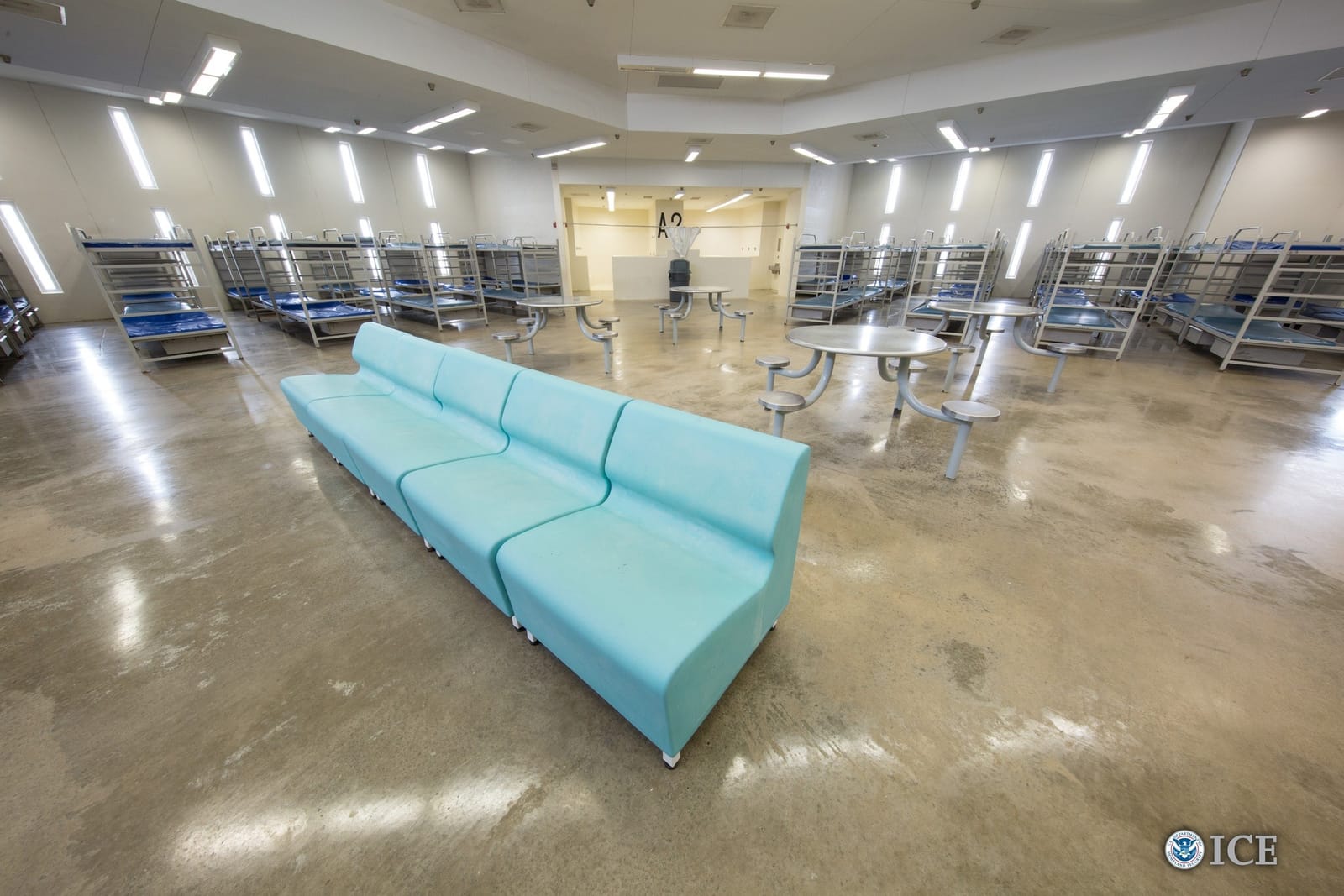
The Guardian published an investigation1 into Gabar Choli, a 40-year-old Kurdish asylum seeker and filmmaker who says Immigration and Customs Enforcement force-fed him for nearly eight months at the Port Isabel processing center in Los Fresnos, south Texas. The reporting rests on dozens of pages of court records plus interviews with medical and legal specialists.
Choli was arrested at an ICE check-in on February 25, 2025, began a hunger strike in March, and was moved to Texas for what an ICE court filing called a higher level of medical care. He was force-fed from late May 2025 until his deportation to Canada on January 6, 2026. Federal judge Rolando Olvera granted the orders and extended them repeatedly, and denied Choli a court-appointed attorney, writing that lawyers are not guaranteed in civil proceedings and that he would keep granting the orders either way.
Two things belong apart here. Choli's account of the procedure2 is his own, and the Guardian states plainly that many of his court records are sealed and parts of the account could not be corroborated.
What is documented is the legal machinery. ICE argued in court that the hunger strike posed a serious threat to the security and good order of the facility, and that the public interest was served by not letting Choli manipulate the immigration system. The government sought authority not only to feed him but to draw blood, run intravenous fluids, and catheterize him for urine analysis, using restraints. Dr. Chanelle Diaz of Columbia University Medical Center, who reviewed the available records at the Guardian's request, estimated the eight-month span would mean well over 100 nasogastric tube placements and possibly more than 200, and said that is not medical care but torture.
The Department of Homeland Security said ICE seeks judicial authorization only where a medical condition presents serious risk of death or permanent harm, "or where other compelling legal or operational interests are implicated." That second clause is the one to sit with. DHS did not answer questions about Choli's case.
The scale is moving in one direction. The Guardian reported last week that at least 10 hunger strikers had been targeted by such orders since January 2025; over the weekend, DHS sources told the paper the real figure is 18, covering January 2025 through August 4, 2026. That is not a leak against the administration. It is the administration's own count, revised upward.
A Grant That Bills the City for the Surge
The Guardian also reported on a Justice Department program called the Model Cities Initiative3, which will split $300 million among two to four cities of more than 100,000 people, with finalists named next month.
The money is real and large. So are the conditions. To qualify, a city must comply with federal immigration enforcement requests, enact rules against urban camping, loitering, squatting, and open drug use, tie continued housing to treatment compliance, and show documented buy-in from the mayor, council, sheriff, and county commission.
Then comes the clause that separates this from every previous policing grant. Recipients must agree, in advance, to a condition governing future reimbursement of the costs of federal law enforcement intervention in the event of a surge in violent crime or public disorder. The city signs up to pay a bill it has not received, for an intervention it has not requested, triggered by a condition the federal government defines.
Amy Solomon, who ran the Office of Justice Programs under Joe Biden and is now at the Council on Criminal Justice, told the Guardian that to her knowledge the condition is unprecedented, and that it forces applicants to preemptively foot the bill for unspecified federal interventions in their own jurisdictions. She also noted the awards look set to be decided by senior political appointees rather than the usual peer review.
The grant document names Washington and Memphis as the models. Both have had National Guard troops on the street. The Memphis task force has seen four officer-involved deaths since it launched last September, and the administration has refused calls to suspend it. The Justice Department said jurisdictions have expressed intense interest, and declined to say whether cities would be required to accept National Guard activation.
Some have already refused in public. Montgomery, Alabama, mayor Steven Reed passed, saying that is not a model he would be looking for. The Billings, Montana, city council voted 9-1 against even applying. San Bernardino, California, pulled its vote off the agenda after public outcry.
The Washington piece is open-ended. The Associated Press reports a National Guard deployment in the capital extended until 2029, through the end of the presidential term. The AP item is headline-only; the extension was announced in mid-July and is confirmed elsewhere.
Minnesota Votes on What Michigan Started
Minnesota votes Tuesday, August 11, in a Democratic Senate primary that has become a proxy for the argument the party had in Michigan last week. Representative Angie Craig, backed by House leadership, faces Lieutenant Governor Peggy Flanagan, backed by Bernie Sanders and Elizabeth Warren, for the seat Tina Smith is vacating.
The dividing line is immigration enforcement, and specifically Craig's vote for the Laken Riley Act, which requires detention of migrants accused of theft and violent crimes, according to AP reporting carried by PBS NewsHour4. Nearly 60 congressional Democrats voted for that bill in early 2025. Craig later wrote in the Star Tribune that supporting any bill giving ICE new authority under this administration was the wrong decision and that she regretted the vote; Flanagan's answer is that it should not have taken 14 months. Flanagan wants ICE dismantled and rebuilt, Craig wants congressional reform and accountability measures, and the Washington Examiner5 frames the race as the party's next ideological showdown.
The money is lopsided and the polling is not. Through July 22, federal filings show Craig raised $12.7 million to Flanagan's $6.6 million, with outside groups heavily favoring Craig. SurveyUSA polling had Craig up five in June, tied in mid-July, and up two in the final pre-primary survey. Craig's campaign is circulating a memo calling it a dead heat and Flanagan's side has published polling showing her well ahead. Both internal numbers are advocacy; the public number is close.
Behind all of it sits Michigan on August 4. Abdul El-Sayed beat Haley Stevens by about one point with 99 percent of ballots counted, in a primary that drew roughly $98 million in advertising, the third most expensive Senate primary in American history, with outside money accounting for 88 percent of Democratic-side spending. The AIPAC-affiliated United Democracy Project was among the largest spenders against him. El-Sayed said Sunday6 he spoke with Barack Obama on Friday and called it warm and inspiring, and an Obama spokesperson confirmed the call. He faces Republican Mike Rogers in November.
Two pieces Monday are argument rather than reporting. Guardian columnist Nesrine Malik7 wrote that the result punctures the centrist claim that left wins are confined to liberal cities, and that inexperience and the absence of establishment endorsement now read as a clean record rather than a liability. Her spending figures run higher than the verified ones and are not used here.
Vox's Eric Levitz argued8 that the left is winning the argument on aid to Israel and should be honest that winning it will not do what many Democrats hope. Ending the $3.8 billion in annual aid would barely constrain a state already spending about 7.9 percent of gross domestic product on its military; an arms embargo would bite harder, particularly on F-35 spare parts; and neither is likely to reverse policy given hardened Israeli opinion, with 2025 Gallup polling putting support for a two-state solution there at 27 percent against 63 percent opposed. Josh Paul, the former State Department official who resigned over arms transfers, told him Israel's F-35 fleet would be grounded within one to two months without American spare parts, which is one source's estimate rather than a settled figure.
Gaza: the Argument Is About Sequence
Benjamin Netanyahu told his cabinet Sunday that Israel rejects the 15-point document Donald Trump announced last month, and that the military will not withdraw until Hamas is disarmed, meaning heavy weaponry, lighter weaponry, all weaponry. He first staked out the position in a social media post last Tuesday. The Daily Wire carried the rejection9 alongside wire and international coverage.
The dispute is about sequencing. The plan, negotiated with Arab mediators in Cairo under Trump's Board of Peace, calls for sector-by-sector weapons removal with Israeli withdrawals following verified demilitarization. Netanyahu wants complete disarmament first. Hamas political bureau member Bassem Naim says the group accepts the road map and expects mediators and Washington to pressure Netanyahu, which is Hamas's characterization of its own position.
How much of Gaza Israel currently holds is reported inconsistently, so here is the range rather than a single figure. The AP says more than half, the Daily Wire said two-thirds on Sunday, and National Public Radio reported in July that it is close to 70 percent. The direction is settled and the exact fraction is not. Roughly 2 million people are confined to what remains. Israeli elections are set for October 27, and Netanyahu is campaigning inside this decision.
Hormuz Is the Lever
Iran named Mohsen Rezaei, the former Revolutionary Guard commander, to head its Supreme National Security Council. Foreign Minister Abbas Araghchi says talks with Oman on new maritime routes through the Strait of Hormuz are in their final stages, while insisting that does not mean the strait reopens. Tehran's stated conditions include an end to the naval blockade of its ports, American withdrawal from the region, sanctions relief, release of frozen assets, and compensation for war damage. Those are demands, not agreed terms.
Two people with knowledge of the talks told the AP that a temporary arrangement would let ships enter near Iran and exit near Oman without tolls, endorsed by Gulf Cooperation Council members and announced jointly with Washington and the International Maritime Organization, in reporting carried by PBS NewsHour10. Axios, CNN, and Fortune corroborated the outline over the past week. The deal is real and the terms are still moving.
Trump told Axios the United States is only semi-negotiating, letting economic pressure accumulate, and said publicly that he is low-keying the conflict. The Washington Examiner reported Monday that he also conceded a munitions shortage and said no talks with Iran are underway, an admission carried by a right-leaning outlet and consistent with earlier Fortune and Axios reporting in March about interceptor stockpiles running thin.
Saudi Arabia, Turkey, and Pakistan signed the Mecca Joint Defense Agreement on Friday, under which an armed attack on any one is treated as an attack on all, per AP reporting carried by PBS11. Pakistani Foreign Minister Ishaq Dar calls it purely defensive, Turkish Foreign Minister Hakan Fidan says it is not aimed at Iran, and Iran says it has no reason to fear it. Every party is insisting the pact is not about the country everyone assumes it is about.
In Yemen, the National Resistance Forces, allied to the internationally recognized government, said a Houthi attack on the port of Mokha killed at least seven people, four soldiers and three civilians, and wounded 15. Houthi spokesman Yahya Saree said the group struck military targets and hit an Aramco refinery in Jazan with a drone; the Saudi Energy Ministry reported a fire there with no casualties and did not name a cause.
Omaha Knows Where the Lead Is
ProPublica, working with the Flatwater Free Press12, tested soil at 388 homes in east Omaha, inside a residential Superfund site where the EPA has spent hundreds of millions of dollars since 1999. Two hundred and eight of those homes, about 54 percent, came back above 100 parts per million of lead.
That threshold matters because 100 parts per million is what the agency's own risk modeling suggests is needed to protect children. The cleanup trigger in Omaha is 400 parts per million, set in 2009 on the basis of health recommendations from 1994, and it has not moved in 17 years, while the Centers for Disease Control has twice lowered its blood lead reference value.
The agency's own March 2024 data indicated that 84 percent of the site, more than 36,000 properties, has areas above 100 parts per million. Under Biden the residential screening level was lowered to 100. This administration raised it to 200, in guidance dated October 20, 2025, and an expanded cleanup that would have covered roughly 27,000 properties did not happen. Other jurisdictions act at lower numbers: Minnesota replaces soil at 100 parts per million near affected children's homes, California cleaned to 80, and Norway has required assessment at 100 in areas children use since 2006.
Natalie Thorpe, an Omaha teacher whose three-year-old tested high, told ProPublica it feels a little bit like being a sitting duck. The contamination is mapped, the modeling exists, and the number that would force action was moved in the other direction.
A Regulator That Cannot Regulate
The National Indian Gaming Commission has had no chairperson since January 12. Under federal law only the chair can take enforcement action, approve tribal gaming ordinances, and certify management contracts. None of that is happening for an industry that generated a record $46 billion last year across 545 facilities run by about 250 tribal governments in 29 states, according to AP reporting carried by PBS NewsHour13.
The Iowa Tribe of Oklahoma is paying for the Harrah's name at its new Chandler casino and cannot get its management agreement approved. Jonodev Chaudhuri, who chaired the commission from 2013 to 2019, told the AP the agency is operating with one arm tied behind its back.
The vacancy also lands in the middle of a fight over prediction markets, with at least eight tribes suing platforms including Kalshi and Polymarket over what they allege is infringement of tribal gaming rights, allegations now in active litigation. The White House has not nominated a replacement.
The Northwest's Worst Fire Season on Record, With Months Left
The Guardian reports14 at least 846 structures destroyed by three converging fires on the eastern side of Washington state, around Spokane. More than 2.9 million acres have burned across Washington and Oregon this year, and Oregon has logged more burned acreage than in any year in its recorded history. Nationally, the National Interagency Fire Center counted 95 large fires burning as of Friday, and more than 45,800 fires and 6.3 million acres since January 1.
The cause chain is legible. July was hot and dry, with parts of both states receiving a half or a quarter of normal rainfall, which cured the vegetation. Then lightning and wind ignited more than 600 fires in a 10-day stretch, some in terrain that would ordinarily still be holding snow. One fire near Spokane, the Old Trails fire, may have been set; a man is in custody and no charge has been named.
The country has been at national preparedness level five, the highest, since July 18, and seven wildland firefighters have reportedly died in the line of duty this summer. An unnamed federal fire captain told the Guardian that level five means triage, and that some fires simply will not get firefighters. Fire ecologist Susan Prichard of the University of Washington said western Washington and western Oregon are ready to burn, and that she hopes she is wrong. Forecasters put the odds of a very strong El Niño developing by September at 95 percent, and more than 1.3 million acres have burned in Europe this year, where Britain and France are bracing for another heat wave after western Europe set a temperature record.
Two Industrial Policies in the Same Week
Meta released a model called Muse Glimmer, built to run on a single graphics card in a personal computer, and said it will publish the weights for Muse Spark 1.2, its most capable system, Reuters reported. Mark Zuckerberg used the launch to argue that the United States is behind China on infrastructure and that American policy should loosen restrictions on training data and support distillation so domestic firms can compete on open-weight models. His line was that the notion AI is so dangerous that the only safe path is an extreme concentration of power seems inherently problematic.
That is a company with $145 billion of planned infrastructure spending this year and a stock down about 10 percent making a regulatory argument that happens to suit it. The argument is not wrong for that reason. It is simply not disinterested.
Pushing the other way, Representative John Moolenaar, who chairs the House Select Committee on China, wrote to the Commerce Department on Monday urging enforcement of a January 2025 rule barring chip manufacturers from shipping advanced logic chips to untrusted Chinese firms, naming Taiwan Semiconductor, Huawei, and Sophgo, also per Reuters. In the same week Meta argues openness is the American advantage, the China hawks argue for the hardest possible closure at the silicon layer. Both are industrial policy; they disagree about which layer to fence.
In the consumer layer, WIRED argues15 the backlash is landing: LinkedIn added a reporting button for content that seems like slop, Snapchat says fully generated video will not be eligible for its discovery feed, Substack added detection, Google pulled a Google Earth feature that let users edit satellite imagery with generative tools after 404 Media reported on it, and Meta switched off an Instagram feature that let anyone make deepfakes of other people after three days of outcry. Meredith Broussard of New York University told WIRED the AI revolution has happened and everybody hates it, and that the grievance is fundamentally about consent. That is her argument, in an opinion column rather than a survey.
Also This Week
Never skilling. Two clinicians writing in the Guardian16 argue the risk in medicine is not only that experienced doctors lose skills but that trainees never build them, and propose requiring a documented unaided assessment before anyone opens a chatbot. Their claims that about two-thirds of American doctors use OpenEvidence and that a Nature Medicine study found literature retrieval tools less accurate than general-purpose chatbots carry no source in the column.
Medicaid and the safety-net clinics. In Jacobin, Maria Esch writes17 that the 2025 reconciliation law will strip almost $800 billion from Medicaid over 10 years and cut enrollment by 10.3 million, and that federally qualified health centers, which draw only about 9 percent of their money from federal grants and the rest largely from Medicaid service revenue, are where that shows up as closed rural clinics. Her remedy is a one-time 5 percent California billionaire wealth tax, opposed by Gavin Newsom and by California's own health centers. Her Medicaid figures carry no named source.
A delegate-math argument. Also in Jacobin, labor scholar Eric Blanc argues18 that if Alexandria Ocasio-Cortez does not run in 2028, the left should run a rank-and-file union worker on Medicare for All and ending aid to Israel. The strategy is contestable; the arithmetic is not. Fifteen percent is the threshold for winning any convention delegates at all.
Hawai'i and the China contingency. In The Intercept, William Hartung argues19 that Pentagon planning built around a China contingency has made Hawai'i a front-line target while delivering less local economic benefit than claimed. His figures, an Institute for Policy Studies estimate of about $130 billion in unpaid military back rent and a claim that the Pentagon overstates its economic contribution by 29 percent, are an advocacy think tank's contested findings in a column. The Red Hill numbers, 250 million gallons of fuel storage and 93,000 people affected by the leak, are better documented.
Three short items. Hunter Biden said his father's prostate cancer has spread further and is very painful and debilitating. Representative Marcy Kaptur of Ohio is moving to rehabilitation after being hospitalized following a hit-and-run crash in Toledo on August 2, and no arrest has been reported. Representative Max Miller is staying on Ohio ballots despite pressure to withdraw over domestic abuse allegations.
The Coverage Gap
The two-way diff between conservative outlets and left and independent outlets came out badly for the left side on Monday, and the biggest miss was economic.
The July employment report was released Friday, August 7. American payrolls fell by 23,000, a sudden reversal that the Bureau of Labor Statistics published and that CNBC, Bloomberg, NBC, and Fox Business all covered20. None of the left or mainstream feeds staged for this briefing carried it; it arrived only as a line in a Dispatch newsletter dek. For any politics that reasons from material conditions first, a negative payroll print is the most load-bearing number of the week, and it came through a center-right outlet. That is a gap in coverage, not a difference in framing.
The second real gap is also from the Dispatch: cyberattacks on American water systems are spreading21. Verified independently, because the newsletter is paywalled: the FBI confirmed seven states last week, and reporting from Axios, CBS, and CNN puts it at 12 states as of August 4, with more than 30 municipal systems targeted in Minnesota alone. The bureau documented pressure loss and flooding in some jurisdictions, attackers changing passwords and locking out operators, and precautionary boil-water notices. Officials suspect Iranian involvement, which the president has publicly doubted. That is a digital sovereignty story of exactly the kind left outlets say they prioritize, and it was not in the staged feeds at all.
Several other items ran only on the right and deserve a look rather than a dismissal. National Review reported Duke Law defying the Supreme Court on affirmative action and ran a piece on Iran rewiring its proxy network. The Daily Wire reported that the lawyer behind the president's immunity win has been named White House Counsel, a personnel story with real consequences that left outlets missed while covering a nomination that blindsided Susie Wiles. Breitbart reported the Transportation Department making English proficiency a permanent requirement for migrant truckers, and reported establishment Democrats pressuring Alani Bankhead's family to push her out of the Montana Senate race, the same intra-party fight covered elsewhere from the Michigan and Minnesota angles. The Justice Department's agreement with Connecticut Children's Medical Center to end gender-affirming medication for minors was carried on the right and absent from the reporting feeds.
Volume is not coverage, and the weekend's most-covered story on the right is the clearest illustration. A flagrant foul on Indiana Fever guard Sophie Cunningham and an opposing player's white privilege comment ran as five separate items across Fox News, Breitbart, and the Daily Wire, plus a Fox piece arguing sports media hit an all-time low covering it. That is not a story left outlets missed. The Intercept covered Cunningham directly22, arguing the right is elevating her as a public face for anti-trans politics, which is itself a column rather than reporting. Both sides are running the same person as a symbol. The same pattern held with Fox running two pieces on the Smithsonian director's alleged Marxist activism, and the New York Post, Washington Examiner, and Daily Wire working the El-Sayed and Hasan Piker association from three directions in one day. Coordinated framing is worth knowing about; repetition across outlets is not new information.
The other direction is real too. The Guardian's eight-month force-feeding investigation, including DHS's own count revised from 10 hunger strikers to 18, appears nowhere in conservative coverage. Neither does the reimbursement clause in the Model Cities grant, though the right covers federal policing surges approvingly. ProPublica's Omaha lead findings and the raising of the residential screening level from 100 to 200 parts per million ran only on the left, as did the National Indian Gaming Commission vacancy freezing enforcement across a $46 billion industry, the scale of the Pacific Northwest fire season including seven firefighter deaths and a country at maximum preparedness since mid-July, and the Intercept's Hawai'i argument.
One structural point applies to Monday briefings generally. Three of the highest-value independent shops in the staging list, 404 Media, Drop Site News, and Democracy Now, published nothing inside the 36-hour window because they run weekday schedules and their last pieces landed Friday and Saturday. That is a scheduling artifact rather than an editorial judgment, and it means the surveillance, Gaza documentation, and independent tech accountability beats are thinner in any Monday edition than they will be a day later. A briefing that reads the same window every day inherits the publishing calendar of its sources.
Method
This edition came from a cloud run in live fact-check mode. Of 24 RSS feeds, 23 resolved; NPR's returned malformed XML and staged nothing, and the Wall Street Journal's feed is stale back to January 2025. The run staged 124 body items and 81 detection items inside a 36-hour window.
Eighteen article bodies were read in full by parallel reader sub-agents. Reuters and AP items arrived as Google News bridges and are headline-only by design, and The Dispatch's lead item sits behind a hard member paywall, so only its headline and dek were readable, which is why both coverage-gap items were verified independently.
Source weighting favors primary reporting over aggregation, and detection feeds from the conservative press are used to identify coverage gaps rather than as the basis for any factual claim.
Every figure, date, toll, and officeholder was checked against live web search. Corrections this edition: five mechanical and three judgment calls. The judgment calls were the contested share of Gaza under Israeli control, reported here as a range with each figure attributed rather than resolved to one number; the unverified spending figures in the Guardian's Michigan column, replaced with Bridge Michigan's verified numbers; and the decision to verify both coverage-gap items independently rather than rely on a paywalled newsletter.
Government claims about casualties, damage, and enforcement are attributed to the government or armed force that made them, on one standard in every direction. Analysis-tier sources, including Jacobin, Vox, The Intercept's columns, and the Guardian opinion desk, are framed as attributed argument rather than as reported fact.
Footnotes
22 footnotes, 22 unclassified.
A footnote carrying a classification was authored as a source record. The rest are the edition's own citations as published: outlet and address as they stood, with no classification, attribution posture or reading depth on record.
- 1
The Guardian (opens in a new tab)theguardian.com
The Guardian published an investigation into Gabar Choli, a 40-year-old Kurdish asylum seeker and filmmaker who says Immigration and Customs Enforcement force-fed him for nearly…
- 2
The Guardian (opens in a new tab)theguardian.com
Choli's account of the procedure
- 3
The Guardian (opens in a new tab)theguardian.com
the Model Cities Initiative
- 4
PBS NewsHour (opens in a new tab)pbs.org
The dividing line is immigration enforcement, and specifically Craig's vote for the Laken Riley Act, which requires detention of migrants accused of theft and violent crimes,…
- 5
Washington Examiner (opens in a new tab)washingtonexaminer.com
Flanagan wants ICE dismantled and rebuilt, Craig wants congressional reform and accountability measures, and the Washington Examiner frames the race as the party's next…
- 6
PBS NewsHour (opens in a new tab)pbs.org
El-Sayed said Sunday
- 7
The Guardian (opens in a new tab)theguardian.com
Guardian columnist Nesrine Malik
- 8
Vox (opens in a new tab)vox.com
Vox's Eric Levitz argued
- 9
The Daily Wire (opens in a new tab)dailywire.com
The Daily Wire carried the rejection alongside wire and international coverage.
- 10
PBS NewsHour (opens in a new tab)pbs.org
Two people with knowledge of the talks told the AP that a temporary arrangement would let ships enter near Iran and exit near Oman without tolls, endorsed by Gulf Cooperation…
- 11
PBS NewsHour (opens in a new tab)pbs.org
Saudi Arabia, Turkey, and Pakistan signed the Mecca Joint Defense Agreement on Friday, under which an armed attack on any one is treated as an attack on all, per AP reporting…
- 12
ProPublica (opens in a new tab)propublica.org
ProPublica, working with the Flatwater Free Press
- 13
PBS NewsHour (opens in a new tab)pbs.org
None of that is happening for an industry that generated a record $46 billion last year across 545 facilities run by about 250 tribal governments in 29 states, according to AP…
- 14
The Guardian (opens in a new tab)theguardian.com
The Guardian reports at least 846 structures destroyed by three converging fires on the eastern side of Washington state, around Spokane.
- 15
Wired (opens in a new tab)wired.com
In the consumer layer, WIRED argues the backlash is landing: LinkedIn added a reporting button for content that seems like slop, Snapchat says fully generated video will not be…
- 16
The Guardian (opens in a new tab)theguardian.com
Two clinicians writing in the Guardian argue the risk in medicine is not only that experienced doctors lose skills but that trainees never build them, and propose requiring a…
- 17
Jacobin (opens in a new tab)jacobin.com
In Jacobin, Maria Esch writes that the 2025 reconciliation law will strip almost $800 billion from Medicaid over 10 years and cut enrollment by 10.3 million, and that federally…
- 18
Jacobin (opens in a new tab)jacobin.com
labor scholar Eric Blanc argues
- 19
The Intercept (opens in a new tab)theintercept.com
The Intercept, William Hartung argues
- 20
Bureau of Labor Statistics (opens in a new tab)bls.gov
CNBC, Bloomberg, NBC, and Fox Business all covered
- 21
The Dispatch (opens in a new tab)thedispatch.com
cyberattacks on American water systems are spreading
- 22
The Intercept (opens in a new tab)theintercept.com
The Intercept covered Cunningham directly, arguing the right is elevating her as a public face for anti-trans politics, which is itself a column rather than reporting.