Issue 30 of The Open Record
The War's Second Front Is Economic, and the Bill Is Arriving at Home
Six months into the Iran war, gasoline is back above $4 a gallon, the Federal Reserve chair has opened the door to rate hikes, and the administration has claimed Venezuela's oil reserves on terms no government has put in writing.
Daily news review for Sunday, August 30, 2026. Every source is footnoted. A note on method is at the bottom.
.jpg)
0% read, about 20 min remaining
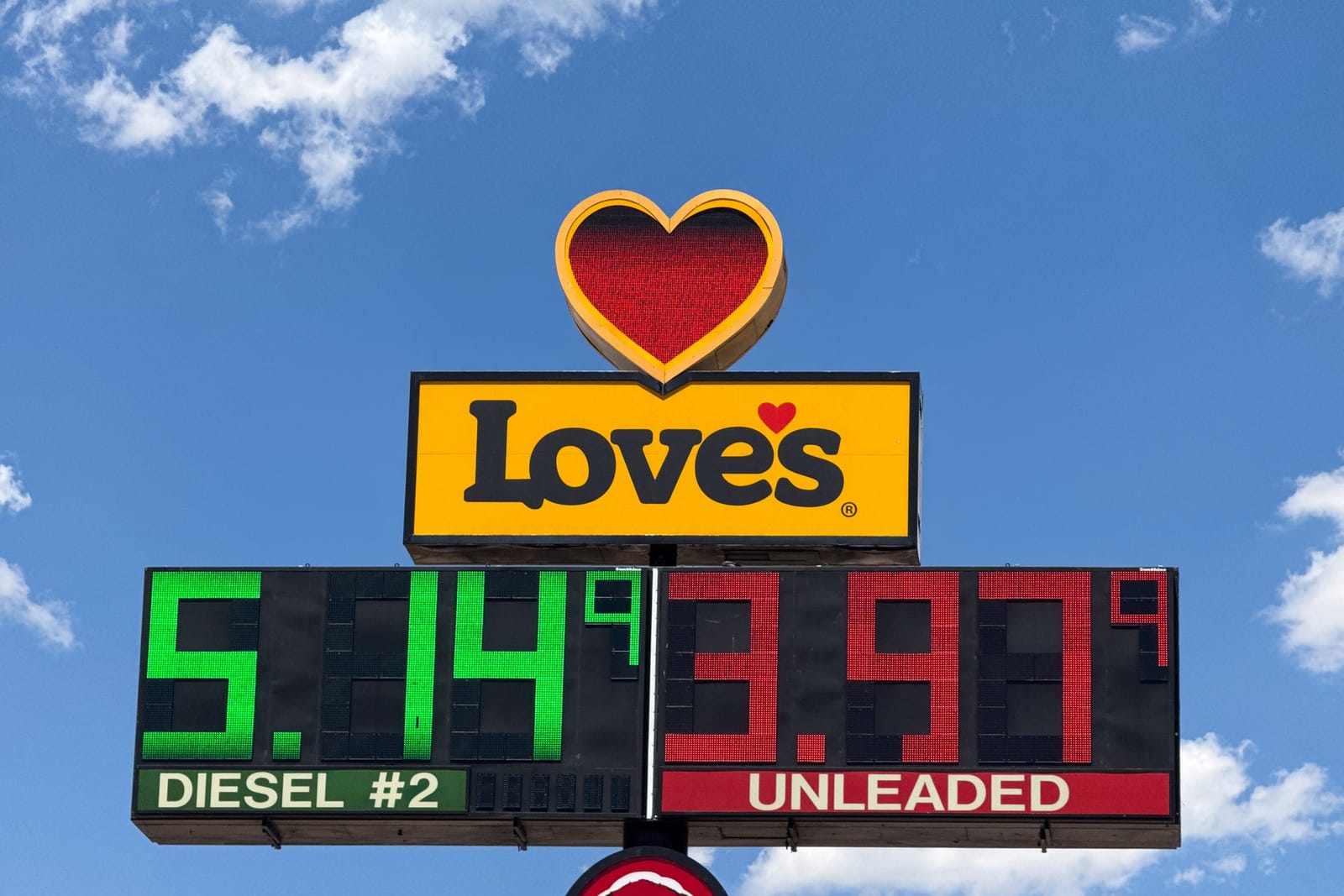
The war with Iran turned six months old this week, and the fighting has moved onto ground American households can feel in their budgets. Washington has opened an economic campaign meant to cut Iran out of the world economy. Tehran has answered by threatening Gulf oil. Gasoline is back above $4 a gallon. The Federal Reserve is talking openly about raising rates. And the president has announced a claim on Venezuela's oil reserves that he says will bring the price back down.
Those are not five stories. They are one story told from five angles, and the connective claim is that the war's second front is economic and the bill is arriving at American kitchen tables.
Underneath it runs a quieter story. While attention sits on the price of a barrel, the domestic enforcement machinery is placing orders and building lists: a $16.7 million purchase order for shock gloves, and a State Department planning file naming a partisan data analyst as the model for foreign influence recruits.
A Regime Change With a Commercial Settlement Attached
On Friday night the president announced what he called the biggest oil deal in world history. The Associated Press, via PBS NewsHour, reports1 that it created a new company, jointly held by the United States government and an undisclosed Venezuelan private operator, holding rights to untapped fields.
Venezuela's acting president, Delcy Rodríguez, put the scope at 17 fields with proven potential of 65 billion barrels and projected $100 billion in investment, and said the agreement runs 25 years2. That number matters, because the AP account of the same deal described the company as holding 100-year rights. No text has been released, so the term is contested between the two governments describing it, and every figure above is Rodríguez's rather than audited. One anonymous United States official told the AP that Washington takes 55 percent of effective output through a mix of ownership and the right to buy at cost.
The deal follows the capture of former president Nicolás Maduro by American forces in January, which makes it the commercial settlement of a regime change. Ricardo Hausmann, a Harvard economist and former Venezuelan planning minister, called it a shameful deal that Venezuelans will not respect; Senator Tim Kaine called it corruption at epic scale; Senator Bernie Moreno called it historic.
The promised relief is not close. Amy Myers Jaffe of New York University told the AP it will do nothing to retail prices over Labor Day weekend, and Kevin Book of ClearView Energy Partners said deploying that much capital into sanctions-degraded infrastructure takes years. The national average for regular sat around $4.08 on Saturday, against $3.20 a year ago. A deal that pays out in a decade is being sold against a price that moved this month.
Six Months in, Iran's Leadership Consolidated Instead of Fracturing
The AP reports3 that Iran's leadership has consolidated around hard-line generals and clerics rather than splintering, the opposite of what the administration predicted.
The supreme leader is now Ayatollah Mojtaba Khamenei, 56, who succeeded his father after the elder Khamenei was killed in the bombing campaign that began February 28, 2026. He has not appeared in public, on video, or on audio since. On August 11 and 12 he issued decrees naming security officials including Hossein Taeb, the cleric who ran the Basij militia during the crushing of the 2009 protests and runs it again now. Sascha Bruchmann of the International Institute for Strategic Studies reads the appointments as preparation to suppress protest before it forms; the AP notes no sign of new protests even as staples grow unaffordable.
One caution: on the toll from January's nationwide protests, the wire copy carries a figure of thousands killed without naming a source. That number is not carried here as fact and should be treated as an unattributed claim until someone puts a name behind it.
The Economic Campaign Has a Name, and China Is the Test
Treasury Secretary Scott Bessent announced Operation Economic Outcast on August 24, an effort to cut Iran off from the global financial system and threaten foreign governments, banks, and firms with sanctions for continuing to trade with Tehran.
Writing in The Guardian, Sina Toossi of the Center for International Policy argues the campaign mistakes applying pressure for having a strategy4. That is a column and should be weighed as argument. His factual observation is the one to watch: China is the principal buyer of Iranian oil and has ordered its firms not to comply, leaving Washington to choose between tolerating the trade and escalating against third countries.
Mohsen Rezaei, the new secretary of Iran's Supreme National Security Council, has said that if the economic war continues, not a single drop of oil will be exported from the Persian Gulf. That is a threat, not a fact. It is also the threat that sets the price of gasoline in Houston, which is why it belongs in an economic story and not only a foreign one.
A Strike Near Kyiv Exposed a Ukrainian Failure Alongside a Russian One
A Russian drone strike on a warehouse in Myla, a village in the Bucha district west of Kyiv, killed at least 37 people in initial reports5, a toll President Volodymyr Zelensky later raised to at least 38, making it the deadliest single attack of the year. More than 370 people were displaced.
The uncomfortable part comes from Ukrainian officials themselves: the warehouse may have been illegally storing munitions next to homes. Local media report that 34 of the dead were residents of a nearby care home for elderly and disabled people. Zelensky called it terrible negligence, noted that Ukrainian law forbids storing ammunition near residential areas, and confirmed criminal proceedings are open. Russia's Defense Ministry says it hit a warehouse holding drone components, a claim attributed to that ministry and not independently confirmed.
The Deadliest Event of the Week Drew the Least Attention
On August 27 a section of glacier at roughly 5,200 meters broke away above the Lhende River in Tibet, fell about 1,200 meters, dammed the river with ice and rock, and gave way. Al Jazeera has the clearest reconstruction6.
Nepali officials report at least 389 dead and hundreds missing, including 668 tourists from 34 countries. Chinese state media and Beijing's foreign ministry report at least 3 dead in Gyirong County and 558 missing, including 260 foreign nationals. Those are two governments' figures, counted separately and moving daily; on one standard, neither is independently verified. The United States Geological Survey found the seismic signal first read as a magnitude 4.4 earthquake came from the landslide itself, and Nepal has warned of further flooding.
Immigration Enforcement Is Placing Capital Orders
The week's most concrete immigration news is a purchase order. The AP reports that Immigration and Customs Enforcement awarded a $16.7 million contract, characterized in reporting as no-bid, for 6,000 pairs of gloves that deliver electric shocks; Democratic senators have called on the agency to cancel it. A capital expenditure on pain compliance at that scale implies routine use, and describes intent more precisely than a press conference does.
The Intercept put the machinery in one place7. As the Group of Twenty finance meeting descends on Asheville, North Carolina, the communities that rebuilt the western part of the state after Hurricane Helene are living under immigration enforcement. On July 26, ICE agents, Forest Service personnel, and Caldwell County sheriff's deputies arrested 13 people at Wilson Creek, a recreation area the volunteer group Latinos Aventureros had helped clean after logging 650 hours delivering supplies to an estimated 1,700 people post-storm. ICE says some had criminal records but has not said who or how many. The state has received $7.8 billion in federal disaster aid against $25.6 billion requested, per state recovery data reported by Asheville Watchdog, while Treasury awarded a $1.03 million contract to the hotel where delegates will meet.
There was a real check on that machinery on Friday. Federal judge Noël Wise in San Jose ruled that the government cannot deport noncitizens for criticizing Israel8, striking down portions of the deportation provisions on First and Fifth Amendment grounds. The case was brought by the Foundation for Individual Rights and Expression on behalf of The Stanford Daily, whose noncitizen reporters had quit, withheld articles, and asked for anonymity. Wise wrote that freedom of speech is illusory if people may only express complimentary views about the government.
The same enforcement caught one of its loudest supporters. Milo Yiannopoulos, the far-right provocateur and former Breitbart editor, was deported to the United Kingdom on Friday9 after ICE detained him in New Orleans. DHS says he entered legally in May 2019, overstayed, and was ordered removed on July 22 after failing to appear; those details are the department's account. Yiannopoulos had publicly called for immigration checkpoints at supermarkets and gas stations, with on-the-spot deportation for anyone who could not prove status.
An Office Was Killed for Looking Inward, and the Replacement Does Both
The Guardian has the most consequential digital-sovereignty story of the week10. Sarah Rogers, the State Department's undersecretary for public diplomacy, handed internal documents about the shuttered Global Engagement Center to a right-wing data analyst who publishes as DataRepublican, to prove the office had censored Americans. Two former senior officials there, Daniel Kimmage and Carrie Goux, reviewed the files and say they show nothing of the kind; Goux said that if the smoking gun was a report on gendered disinformation, they came up short. The office cost roughly $61 million a year and about 120 staff, and was disbanded in 2025.
Then comes the turn. The same department is rebuilding the capability elsewhere. A proposal the paper reviewed would pay up to 30 online influencers across 11 countries in Southeast Asia $2,500 apiece, part of an $11 million campaign countering Chinese propaganda, and the planning document names DataRepublican as the model for foreign recruits. That analyst, identified elsewhere as Jennica Pounds, has disclosed working since July as a special government employee for the Defense Department, and on Friday released a database tracking American members of the Democratic Socialists of America. The Pentagon would not say whether it falls inside her government work.
An office that looked outward was killed for allegedly looking inward, and the replacement looks outward for influence operations and inward for a list of names.
A Death in Custody, and Two Departmental Accounts of It
The Los Angeles Police Department released body-camera footage of the death of Jose Carlos Hoyoz-Munoz, 5811, found unconscious in a cell at the Van Nuys regional jail on July 15. The department said at the time there had been two uses of force; releasing the video, it said there were three. The footage shows officers pinning him to the ground while handcuffed, moving him in a restraint chair, putting a spit hood on him, and later piling on top of him face down on the cell bed. Mayor Karen Bass called for an independent evaluation of officer-involved deaths involving people in mental health crisis. No cause of death has been released, and the use-of-force count is the department's own, revised once.
Labor and the Electoral Left Had a Good Week, With the Strategic Problem Intact
Starbucks Workers United called a nationwide boycott on August 25, aiming to force a first contract for 12,000 unionized baristas, with the AFL-CIO signed on and the Chicago Teachers Union voting to join on August 26. Labor Notes, republished in Jacobin, reports12 the demands: three workers on the floor at all times, hours to existing baristas before new hires, $17 an hour starting pay, 4 percent annual raises, and safety language covering customer assaults. In 43 states, starting wages are still under $16. The union also cites 550 unresolved unfair labor practice charges, its own characterization rather than an adjudicated finding.
More than 700 stores have voted to unionize since the Buffalo wins in late 2021, under 5 percent of the company's roughly 16,000 American outlets, per union and Labor Notes figures. That gap is the strategic problem and the reason a boycott exists at all: a union at 5 percent density cannot win a first contract at the table alone, so it goes looking for leverage in the customer base.
In Florida, Angie Nixon won the Democratic Senate primary on August 18 with 56.1 percent against Alex Vindman's 43.9 percent13, one of the season's largest upsets. Nixon is a former Service Employees International Union organizer and a state representative since 2020 who joined the Democratic Socialists of America in June, was arrested after a sit-in at Governor Ron DeSantis's office over redistricting, and sued the state after being denied access to the detention center known as Alligator Alcatraz. She runs on Medicare for All, universal childcare, a national rent freeze, a $25 federal minimum wage, and reining in data centers, and faces Republican Senator Ashley Moody in November in a state where Republicans hold a registration edge of about 1.5 million. Her own framing cuts against the coverage: she calls herself a social democrat in the Roosevelt tradition rather than accepting the socialist label, and the DSA did not endorse her.
Mail Voting Is on the Docket Eight Weeks Before a Midterm
Federal judge Indira Talwani issued an order Thursday evening temporarily blocking the administration's new mail-ballot rules, which would require states to use a federally designed, individually scanned envelope. In their filing the states noted that California alone mails 23 million ballots, and that at the administration's own claimed rate of under a minute per piece, one requirement adds more than 43 years of official time.
Vox's Ian Millhiser argues the order is written to appeal to the three Republican justices who used the major questions doctrine against the tariffs14. That is legal analysis, and Millhiser says openly that he considers the doctrine illegitimate. The underlying fact is what counts: mail voting is in litigation eight weeks before a midterm, and 44 percent of Democrats voted by mail in 2024 against 26 percent of Republicans.
The Fed Opened the Door, and the Trade Fight Moved Onto Untested Law
Federal Reserve Chair Kevin Warsh used his Jackson Hole speech on Friday to open the door to rate hikes15 without committing to timing, putting the September meeting in play if the price report due days before it disappoints. Warsh said more than half the goods and services the government tracks have risen 3 percent or more from a year ago, against roughly a third in the two decades before the pandemic. Adam Posen of the Peterson Institute said not hiking in September would now itself demand an explanation. Mortgage rates may not follow: the 30-year fixed sits at 6.66 percent per Freddie Mac, and the 10-year Treasury barely moved. Warsh also pitched artificial intelligence as growth without inflation; Kenneth Rogoff of Harvard called that overblown.
On trade, the Canada fight has moved onto legal ground nobody has tested. Last week the president invoked Section 338 of the Tariff Act of 1930, the Smoot-Hawley Act, to impose a 50 percent tax on $20 billion of Canadian imports16, and Ottawa retaliated dollar for dollar. Ryan Majerus, a former trade official, told the AP the law is a blank canvas because it has never been litigated. Georgetown scholars Peter Harrell and Jennifer Hillman argue the statute permits only tariffs offsetting a calculated harm, that none was calculated, and that the targets include hockey sticks and cement. No lawsuit has been filed; the Liberty Justice Center says it has struggled to find plaintiffs, partly because the tariffs touch only about 5 percent of Canadian imports.
On Thursday the president also signed an executive order renaming Lake Ontario as Lake America17, directing the Interior Department to strip the old name from federal materials. Governor Kathy Hochul says New York will not use it.
Water Is the Constraint the Campaigns Are Not Naming
The Plaskett fire in Big Sur18 has burned 8,241 acres in Monterey County as of Saturday night per Cal Fire, up sharply from the day before, with 661 personnel assigned and Highway 1 closed from mile marker 2.1 to 56. The nearby Timber fire is above 24,000 acres at 21 percent containment.
Separately, the Bureau of Reclamation's Colorado River plan requires California, Nevada, and Arizona to cut 1.25 million acre-feet a year for two years19. Nevada has sued the Interior Department, saying basic needs around Las Vegas will go unmet if it absorbs reductions of up to 70 percent over the next decade; that characterization is Nevada's. Lake Mead and Lake Powell both hit record lows this month, and eight other federal reservoirs recorded their lowest levels in at least 30 years. The river serves 40 million people.
The political counterpoint arrived the same day: climate has largely dropped out of Democratic campaign messaging this cycle20. Researchers call it climate hushing. The Searchlight Institute, a Democratic think tank, published a report last year titled, the first rule about solving climate change is do not say climate change, and the Sunrise Movement announced in October it was shifting from climate mobilization to a broader fight against what it calls fascism. Senator Sheldon Whitehouse calls the retreat a strategic blunder, arguing climate has moved from the science department to the economics department. About 6 in 10 Democrats told Pew in April that climate change is a very big problem, about the same share as in 2016. The voters moved far less than the messaging did.
Also This Week
Insider trading, prediction-market edition. The Commodity Futures Trading Commission fined Gabriel Perez, a former White House teleprompter operator, $172,000 for betting on Kalshi21 about words the president would use in speeches. His teleprompter salary was $175,000.
A British donor with a defense portfolio. Reform UK megadonor Christopher Harborne, who gave Nigel Farage an undeclared £5 million gift now under investigation, holds a 15 percent stake in QinetiQ worth roughly £400 million22 plus a jet-fuel brokerage that has taken more than $140 million in Pentagon contracts, while Reform's manifesto promises higher defense spending and tax breaks for the industry. His lawyers say his commercial interests are unconnected to his politics.
Three from the wires. Icelandic voters narrowly rejected reopening European Union accession talks. A ferry carrying about 270 people capsized roughly two kilometers off Kyrenia in northern Cyprus on Sunday afternoon, according to the Turkish Cypriot mayor there, with rescue operations underway and no casualty figures established. And one person was killed and five wounded at a rave in the Aargau region of Switzerland.
A fight the courts cannot fix. The Atlantic reports, at headline and summary level because the piece is paywalled, that the Kennedy Center board keeps extending a legal fight courts cannot resolve23, after a judge ruled last year's renaming illegal and the board moved to rename it again with a longer title.
The cluster most worth watching. Wired, also headline and summary only, carries a warning from leading AI companies that a cybersecurity crisis driven by their own tools is months away24, alongside reporting that hackers targeted more than 100 American water systems and that ICE has ordered robot dogs. That is where the surveillance state, the AI build-out, and critical infrastructure meet, and it is thinly reported across the spectrum.
The Coverage Gap
What follows is a two-way diff between what left and independent outlets carried today and what conservative outlets carried. Both directions are reported at full strength.
Three stories moved through conservative outlets and were absent from the left and independent feeds. The first is the national debt crossing $40 trillion, which happened in the past two weeks and which The Dispatch spent the week on. Left and independent outlets ran the Federal Reserve story and the bond-turmoil story without naming the number underneath them. With the Treasury secretary heading into the Group of Twenty carrying tariffs, a war, and a bond market, that is a hole, not a difference of emphasis.
The second is European digital independence. National Review ran a piece arguing Europe's plans for technological sovereignty are misguided; whether or not the argument holds, the subject went uncovered on the other side today. Adjacent to it, the Washington Examiner ran two surveillance and AI accountability pieces, one on the license-plate reader firm Flock Safety calling its critics terrorists while rebranding as a privacy defender, and one on insurers using AI for prior authorization. That beat normally belongs to outlets like 404 Media, which today published a single story, about interstellar objects. A left press that treats surveillance capitalism as a core subject and cedes two accountability stories in a day to a conservative weekly has a resourcing problem worth naming.
The third is the American military strike on a vessel described as a floating refueling station for drug traffickers, part of the campaign that has been killing people on boats in the Caribbean. Breitbart carried it; the left and independent feeds did not, which is hard to defend given that they led on the Venezuela deal at the other end of the same policy.
The framing side of those feeds is a separate matter and should not be mistaken for reporting that was missed. Conservative outlets spent the weekend on a Justice Department report alleging the Biden-era FBI targeted traditional Catholics, and Breitbart ran a column calling for the return of the House Un-American Activities Committee. Together the two sketch an argument: past surveillance of conservatives justifies future surveillance of the left. The Daily Wire ran House Republicans demanding an investigation into a liberal activist who attended the Ayatollah's funeral, the same machinery pointed at a person, and Fox News invoked a 14th-century Muslim scholar to argue against Mayor Mamdani. The New York Post carried a mass shooting in Trenton, New Jersey, where casualty counts still vary materially between outlets and no figure is repeated here.
Now the other direction. The $16.7 million ICE contract for shock gloves did not appear anywhere in the conservative feeds today, despite being a federal procurement story with a senatorial objection attached. Judge Wise's ruling that the government cannot deport students for criticizing Israel drew no coverage either, notable for outlets that talk constantly about campus speech. The Los Angeles in-custody death footage, absent. The Colorado River cuts and Nevada's suit against Interior, absent, though it is a western-states economic story with farmers at the center. The Starbucks boycott, absent, which is consistent rather than surprising: labor barely exists as a subject in those feeds.
The sharpest one is the leaked Global Engagement Center documents. Conservative media built that story for three years and went quiet when the files landed empty. A silence right after the payoff fails is its own kind of tell, and it is the closest thing in today's diff to a falsifiable prediction that failed.
Two structural failures belong to the whole press. The Nepal and Tibet flood disaster, with hundreds confirmed dead and well over a thousand missing across two countries, ran as wire copy and nothing more on either side of the diff. And the Iran war has been covered as a war and almost never as a price, which is why the gasoline number and the Federal Reserve number keep appearing in stories separate from the one about the bombing campaign that produced them. Volume is not the same thing as coverage, and a day with 118 items in it can still leave the connective story unreported.
What to Watch
First, whether the September Federal Reserve meeting produces an actual rate hike, because the price report lands days before it and Warsh has now spent his credibility on the warning. Second, whether any text of the Venezuela agreement is published, because until it is, the 25-year term, the 100-year rights, and the 55 percent share are three claims from two governments with no document behind them. Third, whether the mail-ballot ruling reaches the Supreme Court on the major questions doctrine, because that argument decides whether the rules of the November election get rewritten in September.
Method
This edition was assembled from 24 RSS feeds over a 36-hour window. Twenty-three resolved; the NPR feed failed on malformed XML. The staging pass pulled 118 body items and 86 detection items. ProPublica, Drop Site News, and Democracy Now resolved but returned nothing inside the window, so three spine sources contributed nothing today.
Sources are weighted rather than treated as interchangeable. Independent and left outlets, including The Intercept, 404 Media, ProPublica, Drop Site News, Democracy Now, Jacobin, The Guardian, and PBS NewsHour, form the reporting spine and are read in full; 21 articles were read in full today. Wire services and paywalled magazines, here Reuters, the AP where only a syndicated headline was available, The Atlantic, and Wired, are used at headline and summary level by design and labeled as such above. Conservative outlets, here The Dispatch, National Review, the Washington Examiner, Breitbart, The Daily Wire, Fox News, and the New York Post, are read as detection feeds: scanned for stories the spine missed and framing worth naming, never used as sourcing.
Every figure, date, casualty toll, and officeholder was checked against live web search rather than carried forward from feed copy. Attribution runs on one standard: a government's claim about casualties, damage, deal terms, or fraud is attributed to the government that made it, regardless of which government. That is why Rodríguez's barrel counts, the Russian Defense Ministry's account of the Kyiv warehouse, Nepal's and China's separate flood figures, and DHS's account of Yiannopoulos's entry all appear as attributed claims rather than facts. Opinion columns and legal analysis, here the Toossi and Millhiser pieces, are labeled as argument.
Corrections fall into two classes. Two were judgment calls, both removing a number rather than changing one: the AP's unsourced figure of thousands killed in January's Iran protests was not carried as fact, and no casualty figure was carried for the Trenton shooting because counts vary materially across outlets. A polling claim in a Jacobin column was also dropped for carrying no fielding dates or sample size. Three were mechanical: the Kyiv-region toll updated from 37 to at least 38 per Zelensky, the Plaskett fire acreage corrected upward from 5,900 to Cal Fire's 8,241, and the fire's start date corrected to Wednesday, August 26, against the Tuesday originally reported.
Footnotes
24 footnotes, 24 unclassified.
A footnote carrying a classification was authored as a source record. The rest are the edition's own citations as published: outlet and address as they stood, with no classification, attribution posture or reading depth on record.
- 1
PBS NewsHour (opens in a new tab)pbs.org
The Associated Press, via PBS NewsHour, reports that it created a new company, jointly held by the United States government and an undisclosed Venezuelan private operator, holding…
- 2
Al Jazeera (opens in a new tab)aljazeera.com
said the agreement runs 25 years
- 3
PBS NewsHour (opens in a new tab)pbs.org
The AP reports that Iran's leadership has consolidated around hard-line generals and clerics rather than splintering, the opposite of what the administration predicted.
- 4
The Guardian (opens in a new tab)theguardian.com
argues the campaign mistakes applying pressure for having a strategy
- 5
PBS NewsHour (opens in a new tab)pbs.org
killed at least 37 people in initial reports
- 6
Al Jazeera (opens in a new tab)aljazeera.com
Al Jazeera has the clearest reconstruction
- 7
The Intercept (opens in a new tab)theintercept.com
The Intercept put the machinery in one place
- 8
PBS NewsHour (opens in a new tab)pbs.org
Federal judge Noël Wise in San Jose ruled that the government cannot deport noncitizens for criticizing Israel
- 9
The Guardian (opens in a new tab)theguardian.com
Milo Yiannopoulos, the far-right provocateur and former Breitbart editor, was deported to the United Kingdom on Friday
- 10
The Guardian (opens in a new tab)theguardian.com
The Guardian has the most consequential digital-sovereignty story of the week
- 11
The Guardian (opens in a new tab)theguardian.com
released body-camera footage of the death of Jose Carlos Hoyoz-Munoz, 58
- 12
Jacobin (opens in a new tab)jacobin.com
Labor Notes, republished in Jacobin, reports
- 13
The Guardian (opens in a new tab)theguardian.com
Angie Nixon won the Democratic Senate primary on August 18 with 56.1 percent against Alex Vindman's 43.9 percent
- 14
Vox (opens in a new tab)vox.com
argues the order is written to appeal to the three Republican justices who used the major questions doctrine against the tariffs
- 15
PBS NewsHour (opens in a new tab)pbs.org
Federal Reserve Chair Kevin Warsh used his Jackson Hole speech on Friday to open the door to rate hikes
- 16
PBS NewsHour (opens in a new tab)pbs.org
Section 338 of the Tariff Act of 1930, the Smoot-Hawley Act, to impose a 50 percent tax on $20 billion of Canadian imports
- 17
The Guardian (opens in a new tab)theguardian.com
signed an executive order renaming Lake Ontario as Lake America
- 18
The Guardian (opens in a new tab)theguardian.com
The Plaskett fire in Big Sur
- 19
PBS NewsHour (opens in a new tab)pbs.org
the Bureau of Reclamation's Colorado River plan requires California, Nevada, and Arizona to cut 1.25 million acre-feet a year for two years
- 20
PBS NewsHour (opens in a new tab)pbs.org
climate has largely dropped out of Democratic campaign messaging this cycle
- 21
The Guardian (opens in a new tab)theguardian.com
$172,000 for betting on Kalshi
- 22
The Guardian (opens in a new tab)theguardian.com
holds a 15 percent stake in QinetiQ worth roughly £400 million
- 23
The Atlantic (opens in a new tab)theatlantic.com
Kennedy Center board keeps extending a legal fight courts cannot resolve
- 24
Wired (opens in a new tab)wired.com
a warning from leading AI companies that a cybersecurity crisis driven by their own tools is months away