Issue 50 of The Open Record
Four Institutions the Executive Does Not Own. Four Judges Who Said No.
A press ban announced on Truth Social, a Kennedy Center shuttered days after a court blocked its renaming, and Homeland Security staffers running state voter rolls at 40 people a day.
Daily news review for Saturday, September 19, 2026. Every source is footnoted. A note on method is at the bottom.

0% read, about 20 min remaining
In the past week the administration reached into four institutions it does not own and acted as though it did. The White House press corps. A congressionally chartered arts center. State voter rolls. And the custody files of migrant children.
In four separate courtrooms, judges told it no.
That collision, an executive branch moving faster than any court will bless, with early voting in the midterms already underway, sits underneath nearly everything below.
The Press Ban Is an Escalation of Kind, Not Degree
On Friday, Trump announced on Truth Social that he is expelling CNN, MS NOW and Politico from the White House, effective immediately, over what he called fiction and lies, and said other outlets would follow. From the Oval Office he said the only fair coverage he gets is from Breitbart and a little from Fox, and that a court should not allow fake news to be written day after day. Asked how the ban would work, he answered: "when you say the ban, which ban, do you know how many bans I am involved in." Then: "oh, the ban on the free press, right." The announcement is documented. Enforcement is not: no badges have been reported pulled, which is the difference between a post and a policy.
PBS NewsHour's account1 carries the detail that matters most. Trump conceded there was no particular reason the action came Friday, and named no specific story. That same day the Washington Post reported that more American service members have died in the war on Iran than the Pentagon has disclosed, CNN reported that a false, AI-assisted intelligence report about a Chinese ship nearly started a war, and Politico reported a congressional investigation into F-35 technology reaching Hong Kong. Trump said the timing was cumulative, not a response to any of it.
The structure of the escalation is what distinguishes it. In his first term the White House banned individual reporters. In this one, as the Guardian reports2, the Associated Press was removed from the pool over the phrase Gulf of Mexico, the White House seized control of the pool rotation, and a federal judge has already ruled the Pentagon's press policy unconstitutional. This is the first time whole national newsrooms have been named.
Jameel Jaffer of the Knight First Amendment Institute argues the press pool is a public forum and that expelling journalists over viewpoint would be doubly unconstitutional. Ari Fleischer, press secretary to a Republican president, said the answer is to win the argument with reporters, not ban them. Both are argument. No court has ruled on this action.
The Firewall Between Child Welfare and Deportation Enforcement Has Collapsed
The week's most consequential reporting is the Guardian's investigation3 into Stephen Miller, the White House deputy chief of staff for immigration policy, and what sources describe as an unprecedented whole-of-government push to accelerate the removal of immigrant children. Miller is reported to be pulling personnel and authority from at least five cabinet departments, among them Health and Human Services, which houses the Office of Refugee Resettlement, Homeland Security, which houses Immigration and Customs Enforcement, and the Justice Department, which runs the immigration courts. The reported effect is the collapse of the firewalls meant to keep child welfare records separate from deportation enforcement.
The numbers come from the advocacy group Mobile Pathways, which analyzed Justice Department immigration court data. By their count, nearly 200,000 children have been ordered removed since Trump returned to office, roughly double the prior rate, with monthly orders rising from about 7,400 in January 2025 to over 16,000 in June and July. Seventy percent were under 13. The Guardian also reports that federal officials have defunded legal representation for more than 20,000 unaccompanied children, and that the Defense Department circulated a request for military lawyers to fill the gap at Health and Human Services with a $10,000 signing bonus, which the department says it is no longer pursuing. These figures are an advocacy organization's analysis of government data as reported by one outlet, not independently re-derived.
The administration's answer is that this is anti-trafficking work, locating children placed with unvetted sponsors. That is the government's claim. Claire Trickler-McNulty, an assistant director at ICE and a senior counselor at Citizenship and Immigration Services under Biden, calls it a facade and a convenient, feel-good cover. Senator Ron Wyden of Oregon says the refugee office's child welfare mission has been sacrificed to deportation quotas. The firewall collapse is the documented part. The motive is contested.
Arrests Hit a Record While the Visible Operations Faded
The Marshall Project analyzed ICE data obtained by the Deportation Data Project at Berkeley and UCLA. Arrests reached their highest recorded level in August, even as the confrontational street operations4 in Chicago, Minneapolis and Los Angeles faded from the news.
What replaced them is what advocates call a shadow surge, running through more than 2,000 agreements with state and local police, concentrated in Republican-led states. The Florida Highway Patrol hands thousands of people stopped for minor traffic violations to ICE. One sheriff's department in Butler County, Ohio, has deputized 44 officers, a quarter of its force, to make ICE-style arrests. In a July snapshot of more than 65,000 people detained, 70 percent had no criminal conviction. The design point is that a traffic stop and an immigration stop look identical from the outside, so the cameras stay home.
A Border Wall Where Almost Nobody Crosses
Customs and Border Protection confirmed that wall panel installation began September 15 along a 47-mile stretch of Hudspeth County, the first major construction in the Big Bend region5. It is part of a $46 billion plan, and the agency says it is now building an average of 12 miles a week, double its earlier pace.
The detail worth holding onto is the denominator. By the Guardian's reporting6, the Big Bend region has historically accounted for less than 2 percent of apprehensions for illegal crossings, and crossings there have fallen further since. Images obtained by the No Big Bend Wall coalition show a 30-foot fence standing in isolation that anyone could walk around, because land disputes have left the government with a patchwork of permissions. Landowners, ranchers and a heritage nonprofit sued this week. Blasting threatens dozens of rock art murals thousands of years old.
ICE Reopened a Prison a Federal Judge Once Called an Absolute Hellhole
The Intercept reported7 that ICE has reopened the Leavenworth, Kansas facility a federal judge once called an absolute hellhole, and hired back CoreCivic, the same company that ran it. The reporting centers on a guard nearly killed there in February 2021 under conditions former employees describe as chronically understaffed. CoreCivic sold the facility to Homeland Security last month for $238 million and expects to keep operating it. It promised the city 300 jobs at a starting wage of $28.58 an hour, and a year later had 150 employees. CoreCivic disputes the characterizations and says the facility is appropriately staffed.
The Courts Did Not Cooperate
A federal appeals court on Friday rejected the administration's third-country deportation policy, ruling that detainees are entitled to more due process. The scale is why it matters: citing Human Rights First, the administration has struck dozens of third-country deals and sent nearly 30,000 people to countries they did not come from. The Guardian reported8 that men deported from the United States were bound and beaten in a detention hotel in Equatorial Guinea, an account from the men's lawyers that has not been independently established.
In Arizona, Judge G. Murray Snow issued a 72-page ruling denying efforts to end federal oversight9 of the Maricopa County Sheriff's Office. An analysis for the plaintiffs by a Berkeley computer science professor found Hispanic motorists there are about 40 percent more likely to be arrested than white motorists, stopped 30 percent longer, and two and a half times more likely to be searched. Snow wrote that the disparities remain and the defendants had failed to explain them. County supervisors called the monitor unelected and unaccountable and cited cost, but a court-ordered audit found nearly 72 percent of the spending the sheriff's office attributed to the monitorship was misattributed or misappropriated.
And in Virginia, Judge Leonie Brinkema declined to accept the Justice Department's assurance10 that a $1.8 billion anti-weaponization fund, built to compensate Trump's political allies out of his lawsuit over the leak of his tax returns, is dead. From the bench she said the issues underlying the case are still alive and kicking, and that administration officials contradict themselves all the time.
Early Voting Began While Homeland Security Ran Voter Rolls
A civil rights coalition led by the NAACP sued the administration on Friday11 to stop it from threatening to deploy federal law enforcement to polling places, claiming voter intimidation under the Voting Rights Act. Federal law already bars armed federal officers from places where an election is being held, and the administration has not so far sent any. What it has done is talk. FBI director Kash Patel told lawmakers the bureau will not shy away. Homeland Security Secretary Markwayne Mullin said ICE would not patrol polls but could show up for a threat or a warrant. Homeland Security says people here legally have nothing to fear and calls racial profiling allegations categorically false, and the Justice Department says it never said it would send agents. This is at least the second such suit, after one filed last week by a coalition led by the League of United Latin American Citizens.
Underneath the rhetoric is something concrete. Virginia's attorney general, Jay Jones, told Homeland Security it may have broken several state laws12. An anonymous whistleblower report published Monday by Senate Democrats alleges that Citizenship and Immigration Services staffers were pulled off other work in late August, given under two hours of training, and set to running government-supplied lists of people through state voter registration systems to find "unlawful voters," at a rate of 40 people a day. Virginia limits its voter lookup tools to people attesting under penalty of law that they are looking up their own record, and Jones says state code does not permit disclosure to the federal government without a court order.
The premise underneath the operation, that noncitizen voting is a significant source of fraud, is the administration's assertion. The research record says it is extremely rare. The whistleblower allegations are unadjudicated, and were published by one party's senators.
The AI Safety Fight Is Also a Chip Export Fight
California Governor Gavin Newsom signed an executive order Thursday13 to accelerate independent oversight of artificial intelligence and to advance creation of what the order calls a kill switch for frontier models, arguing the federal government has not done the work. The federal counterargument came from Trump, who last weekend called warnings that AI could destroy the world a hoax and said the technology will be the greatest economic development engine in history.
Vox traced that position14 to David Sacks, the venture capitalist who served as White House AI and crypto czar and still co-chairs a presidential technology board. A senior White House official told Politico, of Trump's hostility to safety regulation: "David Sacks, it is all coming from him." Sacks is aligned with the open-weights camp alongside Nvidia and Meta, and accuses Anthropic of regulatory capture based on fear mongering. The Vox piece is reported analysis, not a neutral record. What makes it more than a palace story is that the same posture governs whether advanced chips get sold abroad, including to China. Treasury Secretary Scott Bessent and Chief of Staff Susie Wiles reportedly wanted an oversight body. Trump rejected it.
The underlying risk question is not settled. Vox also published a careful piece15 on whether AI meaningfully raises pandemic risk. A 2023 MIT study found chatbots suggesting pathogens and manufacturing protocols within an hour, and researchers found 36 of 38 DNA synthesis companies shipped fragments of the 1918 influenza genome to a student using a fake identity. A 2026 randomized study found the opposite: non-scientists using frontier models were no more likely than people with ordinary internet access to complete a multistep lab assignment. The useful conclusion is that whatever AI turns out to do, the countermeasures are the same and unglamorous. Surveillance, stockpiles, ventilation, broad-spectrum vaccines, and mandatory screening of synthetic DNA orders.
Two adjacent items, both carried at headline level only. Reuters reports exclusively that Anthropic is weighing the release of a new model ahead of a possible public offering. Wired's line this week is that the vulnerability explosion is already happening, which is the version of this story that requires no one to believe in an apocalypse.
Six Months in Jail on a Probabilistic Match
Angela Lipps, a 50-year-old Tennessee woman, has sued the city of Fargo, North Dakota, for $10 million16. According to her complaint, a West Fargo investigator ran AI facial recognition software against a fake ID used by a bank fraud suspect. It returned Lipps's social media photo as a lead. She does not look like the suspect and had never been to North Dakota. A detective requested a warrant anyway.
Federal marshals arrested her at gunpoint at home in July 2025 while she was babysitting her neighbor's four children. She spent nearly four months in a county jail without bail awaiting extradition, then two more in North Dakota, denied her medications and her dentures, losing her home, her car and her property. The charges were dropped after her lawyer produced bank records showing she was in Tennessee. She was released on Christmas Eve with no way home. Fargo says it does not comment on pending litigation.
These are allegations in a filed complaint as reported, not findings of fact. The mechanism they describe is the one worth arguing about: a probabilistic match treated as probable cause. 404 Media and the Intercept held a live event on the same theme this week17, on how AI systems are used to surveil and to kill.
The Kennedy Center's Own Tax Filing Undercuts the Case for Closing It
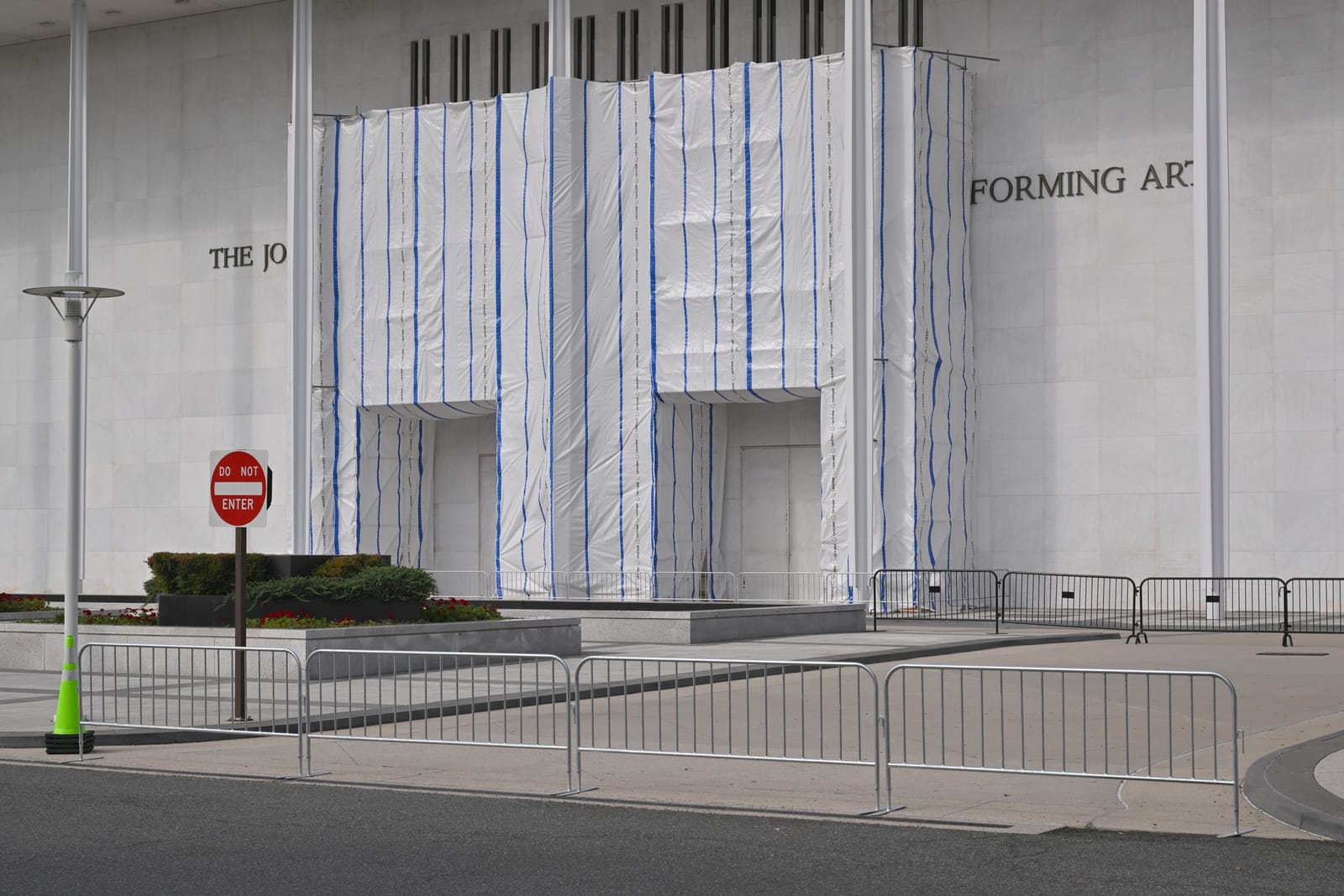
Thousands gathered Friday evening outside the scaffolded building for a protest called Hands Around the Kennedy Center18. The sequence: on Tuesday, District Judge Christopher Cooper blocked the Trump-aligned board's plan to restore Trump's name to the building, which a court had already ruled was illegally added. Hours later the board voted to close the center indefinitely for repairs. On Wednesday the building barred the public, citing a partial ceiling collapse, and Trump was photographed aboard Air Force One holding a placard that appeared to read "Kennedy Center demolished." On Thursday, Cooper ordered 30 days notice before any major physical change, including demolition. Trump says he can save it easily but wants recognition for doing so.
The financial claim is checkable, and it does not hold. Trump says the center has lost tens and even hundreds of millions for years. The Atlantic obtained the center's tax filing19 for the year ending last September. Total revenue was more than $516 million, an increase of nearly $210 million, but that increase was driven almost entirely by $257 million in federal renovation money Trump asked Congress to appropriate and is now threatening to withhold. Subtract it and the institution spent nearly $47 million more than it took in. The year before, under prior leadership and a bipartisan board, it ran roughly $40 million ahead. Program revenue fell from nearly $105 million to about $89 million, against a $48 million bad debt expense and a $43 million jump in unexplained other expenses. The annual audit was not complete at filing, which a former official called very unusual, and the chief financial officer who signed it resigned Tuesday.
Two caveats belong on that arithmetic. Independent experts told the Atlantic that a tax form mixes operating and capital money and cannot settle the question cleanly, and a second reading of the same filing20, reported from Zeteo, frames the result differently. The deficit figure above is the Atlantic's.
Greenland, Sanctions and a Pipeline
Trump announced an agreement with Denmark over Greenland and described it as giving the United States permanent control over security and all other needs. Denmark and Greenland describe it differently. Prime Minister Mette Frederiksen says it recognizes the sovereignty and territorial integrity of both countries and their right to self-determination. Greenland's prime minister, Jens-Frederik Nielsen, says it recognizes Greenland's interests. A State Department official says it bars non-NATO bases and keeps China and Russia out. Per NPR21, it is to be signed during the United Nations General Assembly next week and still requires ratification by both the Danish and Greenlandic parliaments. Trump's characterization and theirs are not descriptions of the same document.
Trump also signed the Lindsey O. Graham Sanctioning Russia and Iran Act22, named for the senator who died in July, two days after the House passed it 262 to 159. It targets Russian oil and gas revenue, officials, the shadow tanker fleet and sanctions evasion networks, and allows tariffs of up to 100 percent on buyers of Russian energy, including China. The criticism is bipartisan and arrives from opposite directions over the same provision: Democrats say the bill hands Trump sweeping tariff authority, while the Washington Examiner argues in an opinion piece that its waiver discretion lets him hand Putin's empire right back.
In the Gulf, Saudi Arabia issued rare air raid alerts for Riyadh early Saturday, at 4 and 6 in the morning, followed by an all clear. Bloomberg attributes the escalation to Houthi strikes, near daily against Saudi Arabia for about a month. Separately, and the distinction matters because aggregated coverage blurs it, the Saudi government says a drone attack launched from Iraq shut down the East-West crude pipeline last week. That attribution is the Saudi government's. Aramco has told European refiners there will be no crude shipments next month, and is trying to restore the pipeline to about half capacity within days and full capacity in about six weeks. A United Nations agency estimates the war and the shipping disruption cost Arab economies roughly $150 billion in its first month. Drop Site News tracked the shipment cuts23 alongside the start of midterm voting and a mosque bombing in Pakistan that killed 16.
Also This Week
Drug labels. ProPublica reports24 that the Clear Labels Act, a bipartisan bill from Senators Rick Scott and Kirsten Gillibrand requiring drug labels to disclose where a medicine was actually manufactured, has been stripped of the two provisions that made it work: the unique facility identifier that lets anyone trace a label to a plant is gone, and the compliance deadline has stretched to five years. An Ohio State professor warns the surviving language, place of business, could let a manufacturer list a New York headquarters for a drug made overseas. The generics lobby spent over $1 million this year on related bills. No Senate floor date has been scheduled.
A nuclear deal with Riyadh. A proposed United States-Saudi civil nuclear power agreement is facing pushback over proliferation risk25, over whether enrichment and reprocessing safeguards are strong enough.
Bolivia and Cuba. Bolivia approved a $1.9 billion deal with the International Monetary Fund and eliminated diesel subsidies, per an Associated Press headline. Austerity of this kind arrives quietly and gets loud later. Cuba's electrical grid collapsed into another total blackout. Both are carried at wire and detection-feed headline level only.
Latino voters. Vox published research from Equis26 on the collapse of Trump's Latino support. He won 48 percent of Latino voters in 2024, up from 36 percent in 2020 and 28 percent in 2016. Approval among Latinos who voted for him has fallen from 93 percent to 66 percent. Stephanie Valencia of Equis names the economy, the war and immigration, and warns Democrats against assuming the backlash transfers to them.
Texas. The state's Senate race is unusually competitive27, with data center siting emerging as a live local issue.
The Coverage Gap
A daily review is only as honest as its willingness to run the check in both directions. Here is what conservative outlets carried that left and independent outlets did not, and then the reverse.
Start with the direction that is unflattering to the left.
The strongest signal is National Review asking where Congress is on the Kennedy Center fight. Left and independent outlets covered the protest, the tax filing and the court orders. None asked why the legislature that chartered the institution has gone silent while an executive branch dismantles it. That is a real hole, and a conservative magazine found it first.
Second, monetary policy. National Review and the Washington Examiner both spent the week on Kevin Warsh and how the Federal Reserve models inflation and wages. On the other side, the Guardian ran a single piece asking whether Warsh can calm the economy, and left analysis outlets ran essentially nothing. For a politics that claims to begin from material conditions, ceding the central bank to the other side's commentary is a strange allocation of attention.
Third, midterm mechanics. The Dispatch reported on why Republican candidates are ignoring Trump, and the Washington Examiner on Republicans fearing they have little to offer voters as Congress leaves town. Both are specific, sourced and about the actual state of the race. Left analysis feeds ran a stack of Trump-is-melting-down items instead, which is a mood rather than a finding. Volume is not coverage, and a high story count on a subject everyone already agrees about can disguise the absence of reporting on the subject nobody has checked.
Fourth, and at lower source weight, Breitbart led with Trump extending most-favored-nation drug pricing to state Medicaid programs. PBS covered it inside a news wrap. It is a real policy change affecting drug costs in all 50 states and it got a paragraph on the left.
Two further items are framing rather than gap. Fox News suggested a Democratic attack on data centers in a key Senate race collapsed when the money trail surfaced. Data centers as a swing issue is real, and PBS documented it in Hood County, Texas, where a lifelong Republican described the noise and health effects as unbearable. Whether the specific Fox claim holds is not something the day's reporting establishes. And Breitbart headlined the stabbing of a Sikh truck driver in Wyoming as "Dems blame Trump," converting a near-fatal attack on a religious minority into a partisan grievance story before the facts were in.
Now the other direction. What left and independent outlets carried that conservative outlets did not touch at all:
The Stephen Miller operation on migrant children, and the nearly 200,000 removal orders behind it. Nothing.
The Intercept on Leavenworth, CoreCivic and the reopened prison. Nothing.
The allegation that men deported from the United States were bound and beaten in Equatorial Guinea. Nothing.
The Maricopa County ruling, and the measured racial disparities in traffic enforcement that keep the sheriff's office under federal oversight. Nothing.
The Homeland Security whistleblower alleging that immigration staffers were set to running voter rolls at 40 people a day. Nothing, despite the right's sustained interest in election integrity, which is precisely the point.
And Angela Lipps, jailed for six months on a facial recognition match. Nothing, despite a real conservative constituency for exactly that civil liberties argument.
The drug pricing split is the sharpest example of the pattern. Conservative outlets covered the president extending most-favored-nation pricing. Left outlets covered a transparency bill being quietly gutted. Both are true, both are about the same industry, and neither audience got the other half.
One structural failure ran across both sides. The Gulf was covered as a war story almost everywhere and as a price story almost nowhere, even though the operative fact of the week is that Aramco told European refiners there would be no crude shipments next month. A war that shuts a pipeline is an energy story before it is anything else, and readers on both sides finished the week better informed about the strikes than about the invoice.
Method
This edition was assembled from 24 configured RSS feeds over a 36-hour lookback window. Twenty-three resolved. One, NPR, failed on a malformed feed, and its stories were picked up through other outlets. That produced 150 body items and 92 detection items. The feed configuration file was missing from the synced source folder and was reconstructed from the prior run's stage output, so the feed roster, routing and tier tags match the last good run.
Sources are weighted rather than treated as equal. Wire services, Reuters and the Associated Press, were used at headline level by design, as were Wired and the conservative detection feeds. Twenty reporting-spine and key-analysis pieces were read in full. Detection-feed items are recorded as coverage signals, not verified claims.
Every figure, date, name and officeholder in the body was checked against live web search: the White House press ban, the Newsom executive order, the Greenland framework, the Graham sanctions act and its 262-159 House vote, the Kennedy Center court orders, the Hudspeth County wall start, the NAACP suit, the third-country deportation ruling, the Riyadh air raid alerts and the pipeline shutdown.
Attribution follows one standard regardless of which government is speaking. Government claims about casualties, damage or fraud are attributed to the government making them. The Saudi government's attribution of the pipeline shutdown to a drone launched from Iraq is the Saudi government's attribution. Gaza casualty and ceasefire-violation tallies appearing in aggregated roundups are Palestinian authorities' figures and were not used as independent fact. The administration's anti-trafficking rationale for the child-removal push is the administration's claim, and its position that noncitizen voting is a significant source of fraud is its assertion, not a finding. Opinion and analysis pieces are labeled as argument throughout.
Several figures carry known limits. Removal-order counts are Mobile Pathways' analysis of Executive Office for Immigration Review data as reported. Arrest figures are the Marshall Project's analysis of ICE records obtained by the Deportation Data Project. The Lipps complaint details are as reported, not obtained from the docket. The Bolivia and Cuba items are wire and detection-feed headlines only.
Two judgment-call corrections were made in this edition, both of a kind worth naming. The first is an event-conflation correction: the Gulf cluster was split into two separate events after an aggregated feed blurred the Houthi strikes on Riyadh with the pipeline shutdown attributed to a drone from Iraq. The second is a source-selection correction on a contested reading: the Kennedy Center finances were taken from the Atlantic's reading of the Form 990 rather than a secondhand reading of the same filing that framed the result as a surplus.
Footnotes
27 footnotes, 27 unclassified.
A footnote carrying a classification was authored as a source record. The rest are the edition's own citations as published: outlet and address as they stood, with no classification, attribution posture or reading depth on record.
- 1
PBS NewsHour (opens in a new tab)pbs.org
PBS NewsHour's account carries the detail that matters most.
- 2
The Guardian (opens in a new tab)theguardian.com
In this one, as the Guardian reports, the Associated Press was removed from the pool over the phrase Gulf of Mexico, the White House seized control of the pool rotation, and a…
- 3
The Guardian (opens in a new tab)theguardian.com
The week's most consequential reporting is the Guardian's investigation into Stephen Miller, the White House deputy chief of staff for immigration policy, and what sources…
- 4
PBS NewsHour (opens in a new tab)pbs.org
even as the confrontational street operations
- 5
PBS NewsHour (opens in a new tab)pbs.org
first major construction in the Big Bend region
- 6
The Guardian (opens in a new tab)theguardian.com
By the Guardian's reporting, the Big Bend region has historically accounted for less than 2 percent of apprehensions for illegal crossings, and crossings there have fallen further…
- 7
The Intercept (opens in a new tab)theintercept.com
The Intercept reported that ICE has reopened the Leavenworth, Kansas facility a federal judge once called an absolute hellhole, and hired back CoreCivic, the same company that ran…
- 8
The Guardian (opens in a new tab)theguardian.com
The Guardian reported that men deported from the United States were bound and beaten in a detention hotel in Equatorial Guinea, an account from the men's lawyers that has not been…
- 9
ProPublica (opens in a new tab)propublica.org
denying efforts to end federal oversight
- 10
PBS NewsHour (opens in a new tab)pbs.org
declined to accept the Justice Department's assurance
- 11
The Guardian (opens in a new tab)theguardian.com
sued the administration on Friday
- 12
PBS NewsHour (opens in a new tab)pbs.org
told Homeland Security it may have broken several state laws
- 13
PBS NewsHour (opens in a new tab)pbs.org
signed an executive order Thursday
- 14
Vox (opens in a new tab)vox.com
Vox traced that position to David Sacks, the venture capitalist who served as White House AI and crypto czar and still co-chairs a presidential technology board.
- 15
Vox (opens in a new tab)vox.com
Vox also published a careful piece
- 16
The Guardian (opens in a new tab)theguardian.com
has sued the city of Fargo, North Dakota, for $10 million
- 17
404 Media (opens in a new tab)404media.co
a live event on the same theme this week
- 18
The Guardian (opens in a new tab)theguardian.com
Hands Around the Kennedy Center
- 19
The Atlantic (opens in a new tab)theatlantic.com
The Atlantic obtained the center's tax filing
- 20
AlterNet (opens in a new tab)alternet.org
second reading of the same filing
- 21
NPR (opens in a new tab)npr.org
Per NPR, it is to be signed during the United Nations General Assembly next week and still requires ratification by both the Danish and Greenlandic parliaments.
- 22
The Guardian (opens in a new tab)theguardian.com
signed the Lindsey O. Graham Sanctioning Russia and Iran Act
- 23
Drop Site News (opens in a new tab)dropsitenews.com
Drop Site News tracked the shipment cuts
- 24
ProPublica (opens in a new tab)propublica.org
ProPublica reports that the Clear Labels Act, a bipartisan bill from Senators Rick Scott and Kirsten Gillibrand requiring drug labels to disclose where a medicine was actually…
- 25
PBS NewsHour (opens in a new tab)pbs.org
facing pushback over proliferation risk
- 26
Vox (opens in a new tab)vox.com
Vox published research from Equis
- 27
PBS NewsHour (opens in a new tab)pbs.org
The state's Senate race is unusually competitive, with data center siting emerging as a live local issue.